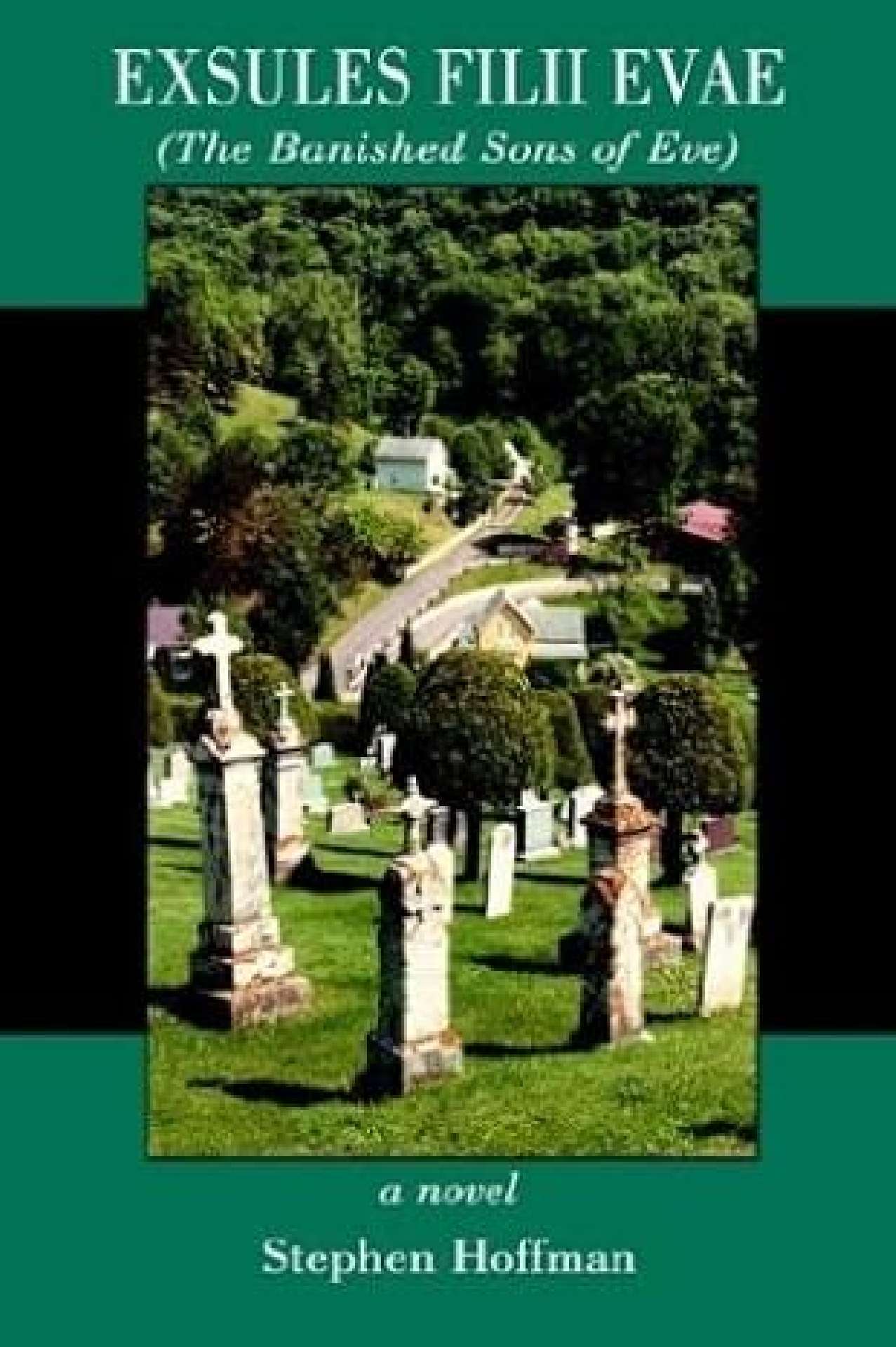
Exsules Filii Evae (The Banished Sons of Eve) - Three RIvers Trilogy I
Formats: E-Book, Audio, Paperback, Hardback
Ages: 18+
Eileen O'Rourke is a sometime nun who left home in ninth grade for the convent. Now she's about to turn 39, and the depressed mother she fled by entering religious life has finally died. Eileen has come back to her Wisconsin hometown to put her mother's house on the market, but also to ask herself some difficult questions about what actually sustained her vocation up until now.
She finds a friend in Adrian Underwood, a 24-year-old local seminarian who's wondering what it means, exactly, to be gay and Catholic, and wrestling with the complex notion of what it is to be called to the priesthood. Other than perpetuating a struggle with authority, does he have any reason to be in the seminary?
For each, the other's friendship comes to play an unexpected role in the search for peace of mind and a measure of happiness.
Exsules Filii Evae (The Banished Sons of Eve) sounds the inner lives of a seminarian and a nun in the 1980s, capturing a time when there was still hope among left-leaning Catholics that the center might hold--before papal quashing of the women's ordination movement, and tides of sexual scandal in the church that led to finger-pointing at gays, had made that possibility seem ever-more-remote. It's a thoughtful person's novel about experiences in a religious tradition--the untold story of what happens when doubt begins to occur in the lives of people who have committed themselves over a lifetime to an institution that will inevitably fall short of their hopes.
Loss comes in many shades, some of them complicated and unacknowledged, and Adrian and Eileen's intertwined story is one of two individuals who pick themselves up and find renewed hope in not-the-most-likely places.
This first installment in the Hoffman Three Rivers Trilogy introduces characters whose experiences of the Upper Midwest capture some of the cavalcade of life in a culture often caricatured but less often understood and presented with clear, appreciative, yet unflinching, vision.
Reviews
Exsules Filii Evae (The Banished Sons of Eve) is a novel about two individuals, each struggling to make sense of their choice of religious vocations: one a seminarian, the other a nun. The very nature of a novel makes it a work of fiction; however the references to embarrassing church pronouncements are not fictitious. They, and their consequences, are as real today as they were in the 1980's - the time frame for this story. Adrian, the seminarian in the story, finds himself unable to continue pursuit of the priesthood because he cannot preach that sexual intimacy without the possibility of procreation is a sin. This teaching was made ultimately clear in the papal encyclical "Humanae Vitae". The final insult to Adrian was the letter from the then Cardinal Ratzinger (head of the Congregation for the Doctrine of Faith - and eventualtly Pope Benedict XVI) that homosexuality is a moral evil. Though Adrian has never acted on his own homosexuality, the very condemnation of his own being makes his decision to leave the seminary without a doubt. Readers will find refreshing portraits of many characters. Hoffman's skill at narrative is both entertaining and heart wrenching. One of the greatest achievements of a writer is to create characters that readers can feel for and with. The reader will empathize deeply for Adrian, and Eileen (the nun), as they move through their pain and make new choices in their lives. More, the reader will be cheering them as they decide. It is not necessary for one to be a Catholic, or ex-Catholic, or even a Christian to find this novel uplifting. Anyone who has found themselves suppressed by political, corporate or religious institutions, and knew they had to rise up somehow beyond the constraints of mediocrity, will identify with Adrian and Eileen.
Stephen Hoffman's brilliant first novel could not be more timely. In 1986, former Cardinal Joseph Ratzinger -- the new Pope Benedict XVI -- issued a letter to the bishops on the "pastoral care of homosexual persons." The letter described gays as "intrinsically disordered" and homosexuality as a "tendency ordered toward an intrinsic moral evil." Most who were gay and Catholic will never forget when Ratzinger's letter came out. It was so stunning in both its breadth and depth of condemnation. This is the struggle of Adrian Underwood, the thoughtful protagonist of the novel. Hoffman's novel incisively captures the universal desire to unite a deep and abiding need for a belief in God with the human limitations of such faith on earth. Underwood and Eileen O'Rourke, his spritual counterpoint, are confronting the same issue from differing ends of life's spectrum. Hoffman's prose is completely evocative of the novel's setting--both in the decade of the 1980s and in the geography of a small midwestern city. Hoffman brilliantly captures not only the spiritual and philosophical matter but the simple and ordinary rhythms of daily life.