

The US Navy’s On-the-Roof Gang, Volume 2 - War in the Pacific - The On-the-Roof Gang 2
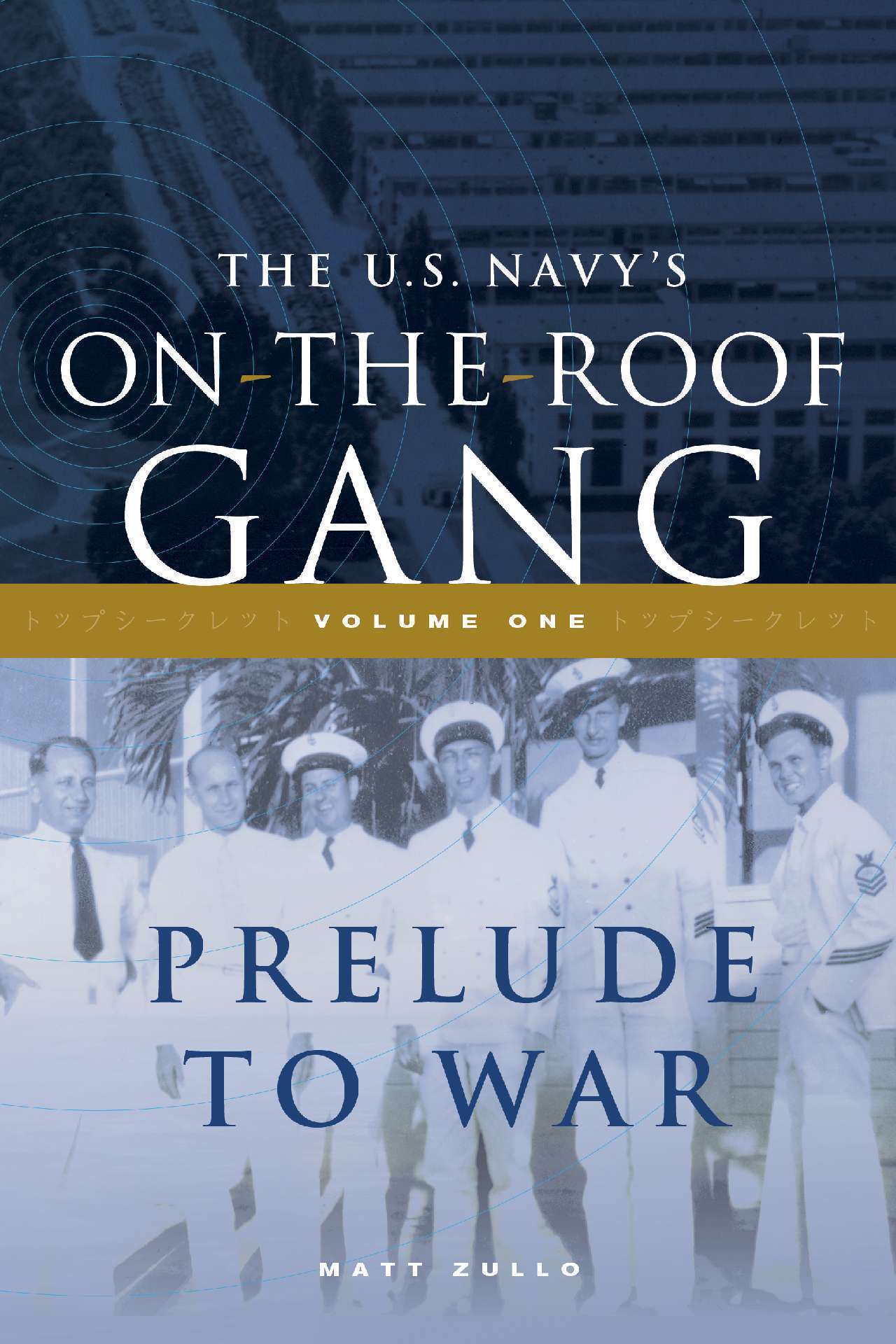
THE US NAVY'S ON-THE-ROOF GANG: VOLUME 2 - WAR IN THE PACIFIC is a narrative nonfiction book based on the true-life story of the "On-The-Roof Gang." It is a sequel to THE US NAVY'S ON-THE-ROOF GANG: VOLUME 1 - PRELUDE TO WAR.This second volume begins with the Japanese surprise attack on Pearl Harbor and documents the contributions of the On-the-Roof Gang during World War II. It focuses on the wartime stories of the On-the-Roof Gang intercept operators, some who were stationed in Hawaii, some who survived a tortuous existence in a POW camp, others who had to evacuate their intercept sites, and still others who performed intercept operations while at sea during some of the most famous naval battles of World War II.
Reviews
Many things are left unsaid about what a country's soldiers go through, especially in war times. They are the ones that swore to protect and defend the country. On-the-Wall Gang is Matt Zullo's way of narrating part of this ordeal. The book was based on a group of radio operators (150 from the U.S. Navy and 26 from the U.S. Marine Corps) trained and deployed to copy Japanese katakana telegraphic code, intercept, and analyze radio messages from the Imperial Japanese Navy (IJN). The sacrifices they made and the challenges with discharging their duties were detailed in Matt Zullo's narrative. The author clearly and accurately recorded the different names of vessels, the dates (day, month, and year), and the places the events happened. He seemed to have researched before putting together this writing. The book is unique. It offers more than a historical account; it also offers a taste of fiction. The book's structure and how the storyline progresses make it look so much like a fictional story. However, the clear and well-documented facts and dates depict history. I love how the author fuses the two — using fiction to complement the grey areas of history. The author was very clear and detailed, both in the description and in the narration. He described the gunshots, sounds of airplanes, fire outbreaks, etc., to the tiniest detail. He narrated the U.S. Navy's ordeal during the war — their pains, joys, sufferings, and so on. He did an impressive job. The author's use of photographs and maps further proved the authenticity of the information that he provided in the book. The author is a good writer. He employs different writing styles to make the read worth the while. Although there is no noticeable suspense in the book, the author still finds a way to keep his readers' attention. This is my favorite aspect, as many historical books can be tiring to read. The book reignited a faded passion I had for military-related books, especially when the author described the processes of running a submarine. Some of the actions in the book brought back memories of some movies I had watched. I particularly enjoyed the deep and clear description of how the sonar controlled the submarine coupled with the quartermaster's reports — they created a nostalgic feeling for me. The editors of the book should be commended for the amazing work they did. I did not find a single error in the book. I couldn't find anything to dislike about this book. Therefore, I'd rate it four out of four stars. I would recommend it to people who love historical events with a touch of fiction.
Must read 🏆 The true story of the men of U.S. Navy’s secret radio service – the On-the-Roof Gang – after the attack on Pearl Harbor to the war's end. SYNOPSIS THE US NAVY'S ON-THE-ROOF GANG: VOLUME 2 - WAR IN THE PACIFIC is an historical novel based on the unknown true-life story of the "On-The-Roof Gang." It is a sequel to THE US NAVY'S ON-THE-ROOF GANG: VOLUME 1 - PRELUDE TO WAR.This second volume begins with the Japanese surprise attack on Pearl Harbor and documents the contributions of the On-the-Roof Gang during World War II. It focuses on the wartime stories of the On-the-Roof Gang intercept operators, some who were stationed in Hawaii, some who survived a tortuous existence in a POW camp, others who had to evacuate their intercept sites, and still others who performed intercept operations while at sea during some of the most famous naval battles of World War II. Before even starting page one, the reader knows the history, the big picture of World War II, the War in the Pacific, and, most specifically, about the attack on Pearl Harbor. Some may even be familiar with the stories of American prisoners of war by the Japanese. Others may have gleaned their understanding of these events from Hollywood films. Others may have heard stories from elderly family members that served during that time and experienced it firsthand. But for most, that knowledge is a leftover from a history class or two and, unless you were very, very lucky, those classes were about as interesting as watching paint dry. Author Matt Zullo has crafted a remarkable fictionalized history based on extensive academic research as well as detailed information straight from the mouths of the men that lived it. This story literally came alive. After reading the superb first volume (The U.S. Navy’s On-the-Roof Gang: Volume One – Prelude to War), I felt like I already knew many of the individuals portrayed in this continuation of the story. And even though I knew what was coming, historically-speaking, it was still an absorbing experience reading about how known events happened and how these men stepped up and played their part in the action. Many of the events were achingly tragic or shocking, and I was utterly invested in their outcome, and in what happened to the men I’d come to know. It was sobering to realize that these men were never able to tell their families what they did during the war because it was all classified and remained classified for decades afterward. One of the things that surprised me in this and the previous volume was how vast the naval radio operations were at that time and how much broader they had yet to become by the end of the book. There is a helpful list in an appendix showing where all the stations were located and their operational dates. Some are, of course, in very exotic locations, but I was surprised to find there was one in my own state of Texas, in a place I’ve even visited (and now will again with a different goal.) The role of the On-The-Roof Gang was shrouded in secrecy for so long, and I am grateful to this author for writing this book about them and their accomplishments. I am honestly amazed that he could do so in such an easy-to-read but page-turner of a book. Start with Volume One to get the background information, and then jump on Volume Two as soon as you can. If you’re a World War II history buff or have an interest in the history of the war in the Pacific, or are a ham radio/radio enthusiast, this book and its preceding volume are MUST READS. REVIEWED BY Karen Siddall
This second volume of a historical fiction series focuses on the Navy’s “On-the-Roof Gang,” a highly trained and dedicated band of radio operators who are Americans’ eyes and ears in the Pacific theater during World War II. This group was called the On-the-Roof Gang because the members were trained in a hutch on the roof of the Navy’s headquarters in Washington, D.C. The band was the brainchild of a driven man named Harry Kidder, who developed the curriculum. The school began in 1929 and kept turning out graduates right up through the early years of the war. The esprit de corps was almost mystical. The novel takes readers from the infamous Pearl Harbor attack to the end of the war, detailing the gang’s victories and losses. One of the most gripping parts of the tale is the capture and subsequent imprisonment of the operators on Guam, which became overrun just days after Pearl Harbor. They wind up in Zentsuji prison camp in Japan, suffering incredible hardships but never cracking, largely through the leadership of Radioman First Class Markle Smith, an extraordinary figure whose exploits are heroic. But readers get a tour of the whole war, from Pearl Harbor through Guam and Corregidor and then, with the tide turning, Midway, Coral Sea, Leyte Gulf, and on and on. Zullo calls his absorbing book fiction for the good and simple reason that he creates scenes and dialogue when he has to. But make no mistake, this is authentic history. All the characters are real people (like Smith) who performed bravely. In fact, when the author is not creating scenes—which he does quite well—he is scrupulously listing all the people involved, all the mind-numbing acronyms, all the minutiae of a vast war machine. So there is good stuff here for military buffs as well as those who just like an engrossing story. And there is ancillary information front and back (for all that initialese) as well as copious illustrations throughout: maps and period photographs. This sequel to Zullo’s Prelude To War (2020) shows members of the Greatest Generation at their greatest in a truly stirring account. A well-written and engaging tale about a remarkable and courageous group of radio operators.