So You Want To Be An Inventor - So You Want To Be A… 14
Formats: E-Book, Paperback
Ages: 8-11, 12-15
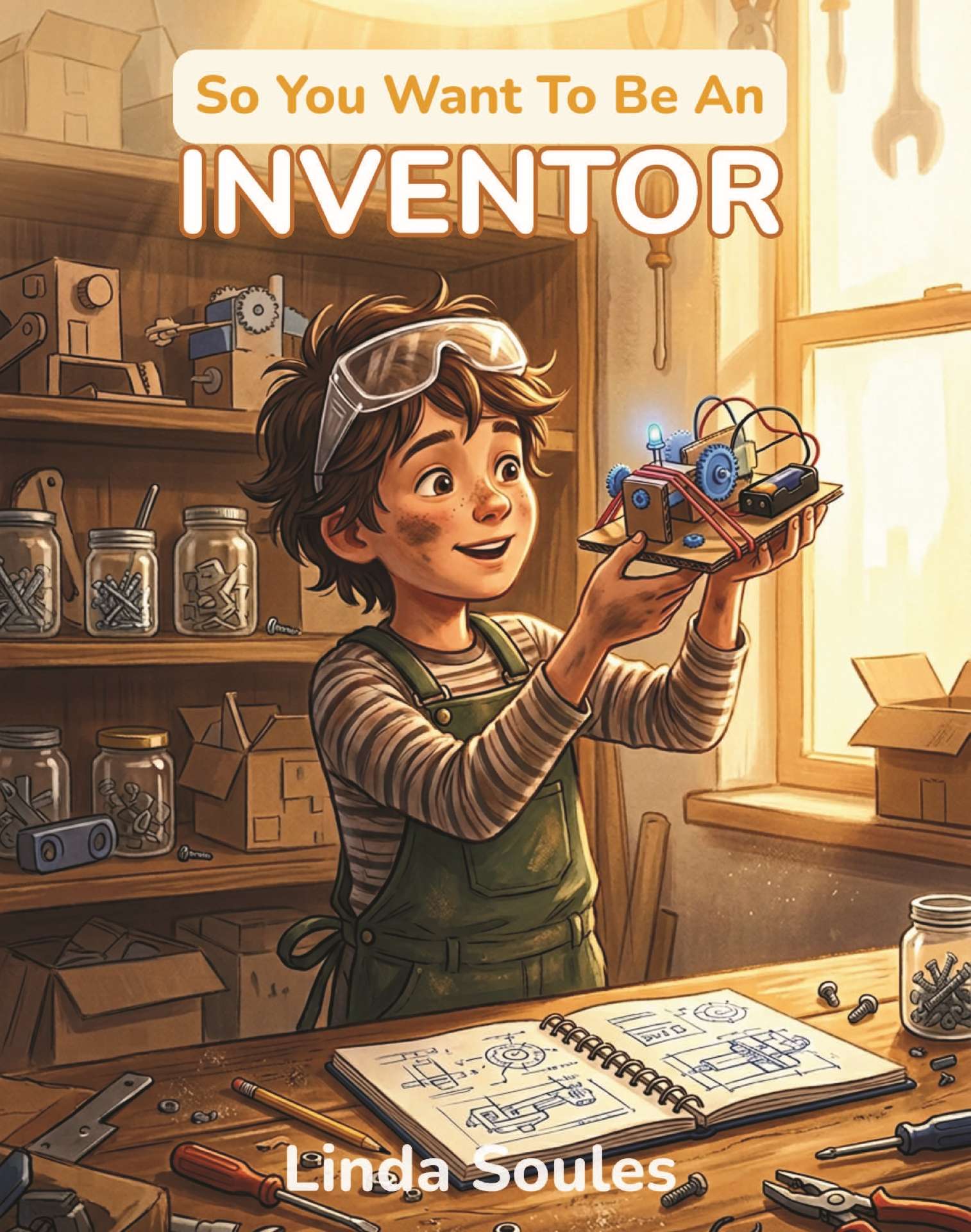
What if the next world-changing invention starts in the mind of a kid who hasn't built it yet? This fun, illustrated STEM children's nonfiction book takes young readers ages 10–14 behind the curtain of one of the most exciting careers on the planet — and shows them exactly what inventors really do, from first spark to finished creation.
So You Want To Be An Inventor is a career book for kids who are done with the myth of the lone genius. Instead, it tells real stories — the ones where an idea starts as a restless question, gets tested through science experiments and failed prototypes, and slowly becomes something the world has never seen before. Kids learn how inventors, engineers, scientists, and designers work together to solve problems that everyone else decided were impossible.
The science and engineering principles behind history's greatest inventions come alive here, not as dry facts but as fun tools young readers can understand and start using. Design thinking, creative problem-solving, hands-on activities, and the patent process that protects new ideas — it's all inside, explained with honesty and genuine respect for a young person's intelligence. This STEM children's book treats its audience like the future innovators they might actually become.
What makes this career book different is what it doesn't do. It doesn't pretend inventing is easy or glamorous. It shows the cost — the late nights, the versions that don't work, the discipline of failing instructively and learning precisely why something broke. And then it shows the reward: that moment when a thing you imagined becomes a thing that exists. Every inventor featured in these pages will tell you there is no feeling like it anywhere.
Kids curious about STEM careers will find a roadmap here, not a lecture. Kids learn what young people can do right now — the questions to ask, the experiments to try, the skills to build — to find out whether inventing might be their calling. They meet remarkable people who changed everyday life through relentless creative persistence and a refusal to accept that the world had to stay the way it was.
This is a career guide built for kids who take apart toasters to see how they run, who sketch better versions of ordinary objects in notebook margins, who learn by doing and won't stop asking why. Vivid illustrations and specific, honest detail make every page feel like a conversation with someone who genuinely wants you to understand this work. Because children's natural curiosity about how things work is exactly where great inventors begin — and kids deserve a book that takes that curiosity seriously.
The next great invention is already forming as a question in someone's mind. It might just be yours.
Reviews
So You Want To Be an Inventor by Linda Soules invites readers to imagine themselves as inventors, emphasizing curiosity and observation as the starting points for new ideas. It explains that invention is not about sudden inspiration but about noticing problems and asking how things might work better. The narrative walks readers through the process of experimentation, showing how early prototypes often fail and how those failures help shape better solutions. The book highlights how inventors work in a variety of spaces, from simple home workshops to professional laboratories, and introduces tools such as notebooks, prototypes, and modern technologies like 3D printing. It also explores the realities of the field, including the gap between an idea and a finished product, and the persistence required to keep improving. The book encourages readers to start small, observe the world around them, and take their first steps toward creating something new. So You Want To Be an Inventor guides readers through complex concepts in a natural way, with pacing that moves from simple questions to more detailed explanations. The writing relies on direct address, posing questions that draw readers into the process and make the material interactive. Detailed, generated illustrations reinforce each idea and clarify how inventions take shape. The book also uses real-world examples and brief narratives to ground abstract concepts, making them easier for young readers to grasp. Repetition of key ideas, such as curiosity and persistence, reinforces the central message while maintaining consistency. Readers who enjoy hands-on thinking, problem-solving, and creative exploration will find Linda Soules' book especially helpful. The combination of educational themes and an encouraging, imaginative approach invites readers to see themselves as capable creators.