So You Want To Be An Explorer - So You Want To Be A… 19
Formats: E-Book, Paperback
Ages: 8-11, 12-15
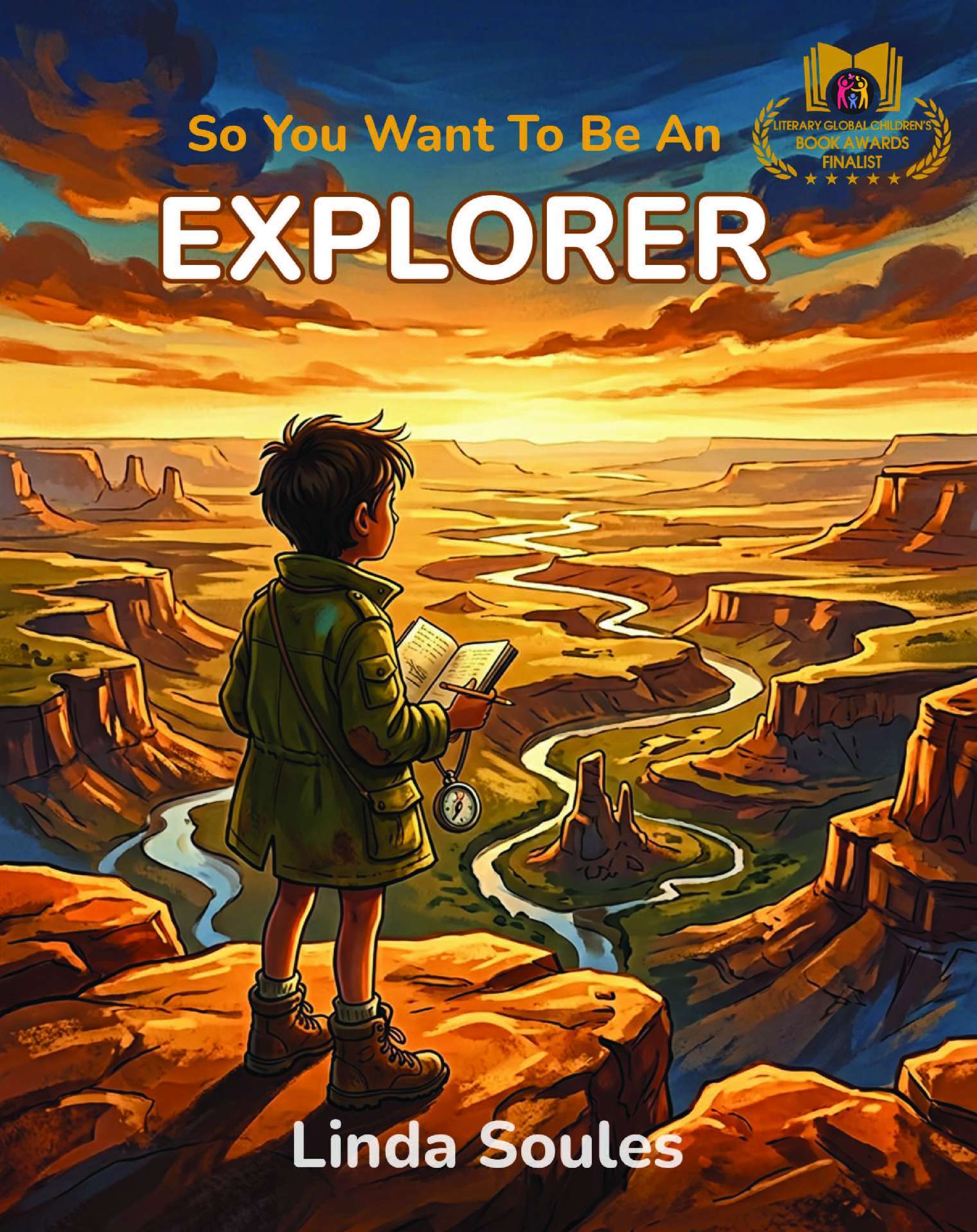
Somewhere beyond the edge of every map, there are places no human has ever seen — and the next great explorer to find them might be a kid reading this book right now.
So You Want To Be An Explorer is the ultimate guide for young adventurers ages 10 to 14 who feel the pull of the unknown. This isn't a fairy tale about treasure maps and pirate ships. It's an honest, illustrated look at what real explorers actually do — the years of scientific training, the physical preparation, the survival skills, and the mental toughness required to venture into environments that were never designed for human beings. From deep ocean trenches to polar ice fields, from uncharted jungles to the edges of our own solar system, this book takes kids inside the full range of modern exploration and the extraordinary careers it offers.
What does an explorer's daily life actually look like? How do expedition teams — scientists, navigators, survival specialists, and local guides — prepare for months of fieldwork in extreme and remote places? How do explorers document their discoveries so that what they find becomes part of the permanent human record? And what does it feel like to stand somewhere no person has ever stood, or to understand something no one has ever understood before? These are the questions young readers are really asking, and this book gives them real, specific answers.
Inside, kids will discover how explorers master geography, navigation, and survival science before a single expedition departs. They'll learn about the physical and psychological demands of operating in extreme environments — and how explorers prepare both body and mind to meet them. They'll meet remarkable figures from the history of exploration whose daring adventures expanded the boundaries of what humanity knows about its own planet. And they'll find out what young people can start doing right now to discover whether exploration might be their own calling.
This is a book that treats kids as equals. It doesn't simplify the hard parts or skip over what the work truly costs. It brings young readers all the way inside the world of exploration — the fun of discovery, the weight of responsibility, and the deep rewards of contributing something new to human knowledge. Every page is illustrated with care, making the science, the geography, and the adventures come alive in ways that stick.
For the kid who reads every map to its edges and immediately wonders what lies beyond. For the young reader who wants more than a dream — who wants to know exactly how to make it real. There are still questions no one has answered and places no one has reached. The next explorer to change what we know about this world is growing up right now.
Reviews
If you've got a kid who's always asking 'what's over there?', this book is a great place to start. It reminds kids (and parents) that exploration isn't over. It's in the deep ocean, under our feet, up in the treetops, and in tiny worlds we can't see without tools. This book works best as a guide for young readers stepping into the role of an explorer. Linda Soules introduces frontiers that still contain blank spaces, then explains what explorers do in practice: observe, measure, record, and bring knowledge back. It moves from striking facts (like how little of the seafloor has been mapped) to hands-on missions a kid can try, mapping a neighborhood, following a stream, and starting a field notebook. It also includes brief snapshots of figures such as Sacagawea and Shackleton, emphasizing that exploration depends on preparation, teamwork, and decision-making, not only equipment. Soules' writing is clear, energetic, and full of 'you can do this' momentum. The best pages feel like a coach and a storyteller teamed up. For parents, it's easy to use as a springboard for weekend walks, museum visits, and simple 'what did you notice?' conversations. In the end, this book lands a powerful message for ages 10-12: the world still holds mysteries, and the best explorers aren't reckless. They're prepared, respectful, and responsible with what they find. It's a strong pick for families who want a nonfiction read that nudges kids off the screen and into noticing the real world.