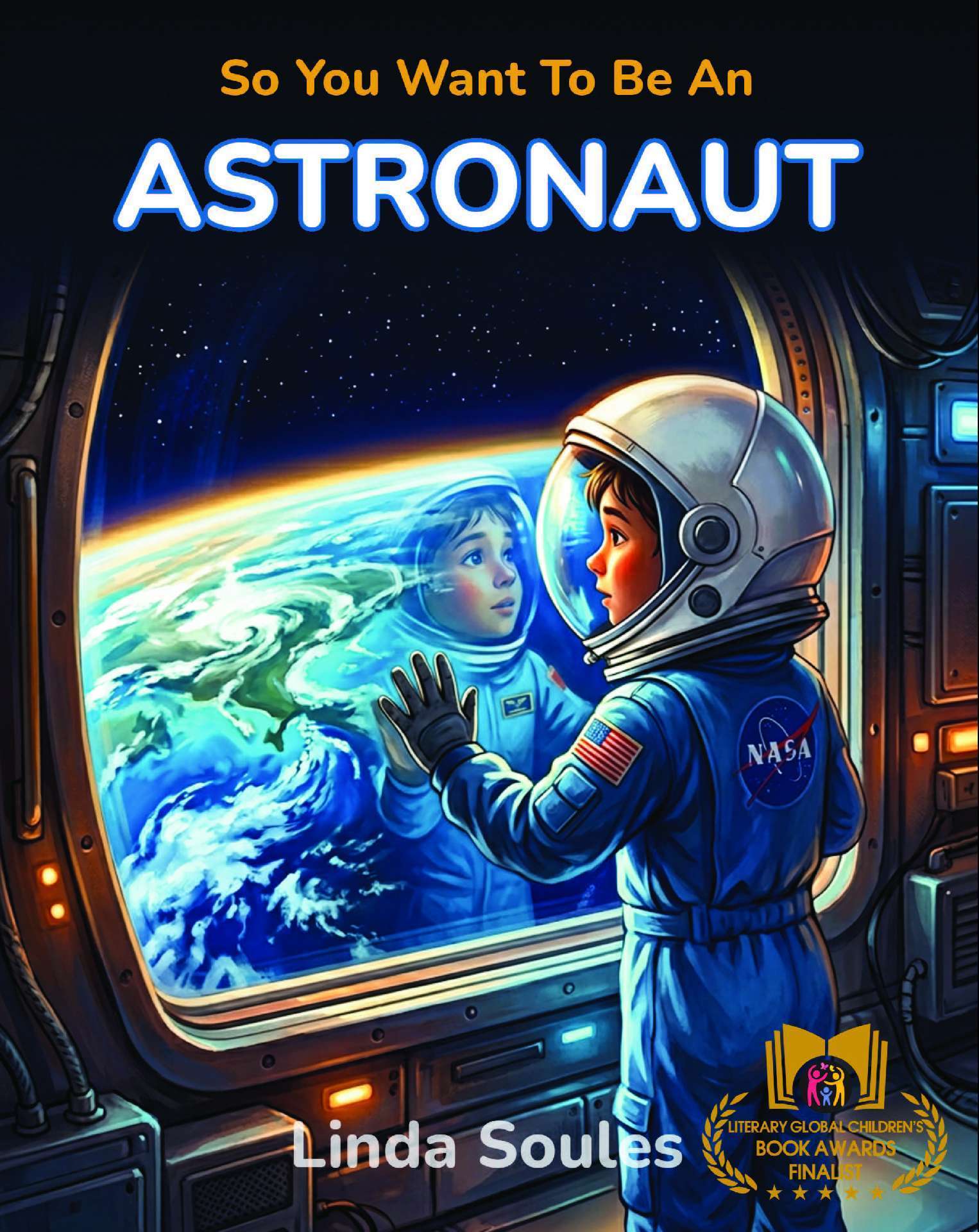

So You Want To Be An Astronaut - So You Want To Be A... 1
Formats: E-Book, Paperback
Ages: 8-11, 12-15
What does it really take to become an astronaut — not in a movie, but in the actual universe where rockets shake your bones and silence stretches forever outside the hull?
So You Want To Be An Astronaut is the honest, illustrated guide that curious kids have been waiting for. It takes young readers ages 10 to 14 deep inside the science, the training, and the daily reality of one of the most extraordinary careers a person can pursue. No sugarcoating. No skipping the hard parts. Just the real story of what happens between the dream and the launch.
You will follow the full path: years of preparation before a single mission, from underwater spacewalk simulations to wilderness survival training. You will learn the science of space exploration — orbital mechanics, life-support systems, and what happens to a human body living in microgravity far from Earth. You will discover how a small crew depends on each other across distances no rescue team can cross, and what happens when the mission does not go exactly as planned.
The book is rich with space facts that go far beyond the basics. It explores our solar system and the science careers that make every mission possible — engineers, flight surgeons, mission controllers, and the astronauts themselves. It covers the history of space exploration and the pioneering figures who proved that human beings could survive and work in outer space. And it asks the question young readers care about most: what can I start doing right now?
Every page is designed to pull you in. Colorful images and short, focused sections make even complex science accessible and fun to explore. Glossaries break down key terms without slowing the pace. This is nonfiction built like a reference and an adventure at once — the kind of illustrated companion a child first loves for its photographs at eight, then returns to at twelve or fourteen discovering new depth every time.
Younger readers thrive with a parent or teacher alongside them, turning pages into rich conversations about science, ambition, and what is possible. Independent readers in the middle grades will dive in headfirst, absorbing details and beginning to picture themselves in the role. Older readers and adults will find surprising layers — fascinating history, memorable insights, and a voice that never talks down to anyone.
For every young person who looks up at the night sky and feels something stir, this book is the real answer they deserve.
Reviews
Soules transports young readers to space in this informative guide to the life of an astronaut, one of many in her multi-part career exploration series. Space exploration is 'the biggest dream a human being can have,' she declares—and a profession that requires significant study, hard work, and rigid preparation. She details the training required, the physical toll the job takes on human bodies, and the important research that takes place, clarifying how the 'absence of gravity means that everything—sleeping, eating, exercising, going to the bathroom—must be relearned and adapted' for those brave and patient enough to take the risk. The scope of information Soules provides is extensive but not overwhelming, covering nuts-and-bolts concerns like the mechanics of spacesuits, the fascinating novelty of weightlessness, and the emotional hardship of leaving loved ones behind for months at a time. Younger readers will be entertained by the book's amusing facts—somersaults are an everyday job perk, and shrimp cocktail in space can be a gastronomic delight—but Soules pays plenty of attention to the technicalities of the profession as well (telemetry readings, gravitational forces, and robotic limbs are just a sampling of those topics). Most interesting are fun facts about the surprises of life in space, like the unique smells a spacesuit picks up after spacewalks—'burned steak, gunpowder, and raspberries'—or why floating crumbs can be deadly...Soules does her best work when describing the emotional impact of an astronaut's job, the moments where the view of Earth from afar 'takes your breath away'—and the ultimate realization that traveling to space is the best way to 'understand why home matters.'
What a smart read for smart kids! Designed for young readers, So You Want To Be An Astronaut by Linda Soules offers the budding space explorer just about everything a kid needs to know about travel beyond our pale blue dot. From where they work, from the tools of the trade, to the best and hardest parts of the job. From the day-to-day routine on the International Space Station, from the people an astronaut will work with, to the most important personal qualities he or she needs to succeed, to inspiring examples of astronauts who did, this book provides plenty of useful information for any child or young teen considering a career as an astronaut. What I appreciated most about So You Want To Be An Astronaut is its ability to speak honestly in an age-appropriate manner for its intended readers. Author Linda Soules has clearly researched her subject fully, but never allows that research to weigh down the content, illustrating she knows the attention span of her audience well. My favorite part of the book was the profile of Valentina Tereshkova, who at twenty-six applied for the job of cosmonaut on a whim and became the first woman in space. What an inspirational example for young girls she is! The illustrations also add to the book’s appeal with a combination of realistic and cartoon-style illustrations that should appeal to kids of all ages. Parents, too, will appreciate the “Want to Learn More?" section at the end of the book that includes books to read next, websites to explore, and things to do to help their children reach for the stars. A highly recommended introduction to a world of possibilities beyond our own.
So You Want To Be an Astronaut pairs rigor with wonder for readers ten to twelve. Linda Soules writes as if she is beside a kid at the window: the dream is real, the work is hard, the sky still calls. If someone asked what the book covers, I would trace it like a long answer over coffee. It opens on the pull to leave Earth, then moves into real preparation: candidate years, jets, the big pool, Russian, emergency drills. The middle is station life: science in weightlessness, maintenance, spacewalks, the suit as a small spacecraft, daily noise and habit. The launch reads almost tactile: countdown, shaking, high g, then silence and a drifting pencil. Soules keeps the harder truths in frame (long waits, strained bodies, months away from home) beside the wonder (Overview Effect, cupola light, dreams of wind and grass). Brief nods to Gagarin, Jemison, and Tereshkova sit near the end, where the tone turns toward what a curious kid can start doing now. The book speaks to the reader directly and uses clear images (countdown, pencil after cutoff) so dense training feels graspable. Some stretches stack technical detail (pressure, suits, the body in space); some readers will stay with every line, others may skim. The glossary and fact boxes help. Short profiles and plain talk about missing home keep ambition from sounding like pure fantasy. For a child who already looks up at night, this is a grounded companion. It explains the path in plain steps, without dulling the reason anyone looks up at all.