So You Want To Be A Shark Researcher - So You Want To Be A… 16
Formats: E-Book, Paperback
Ages: 8-11, 12-15
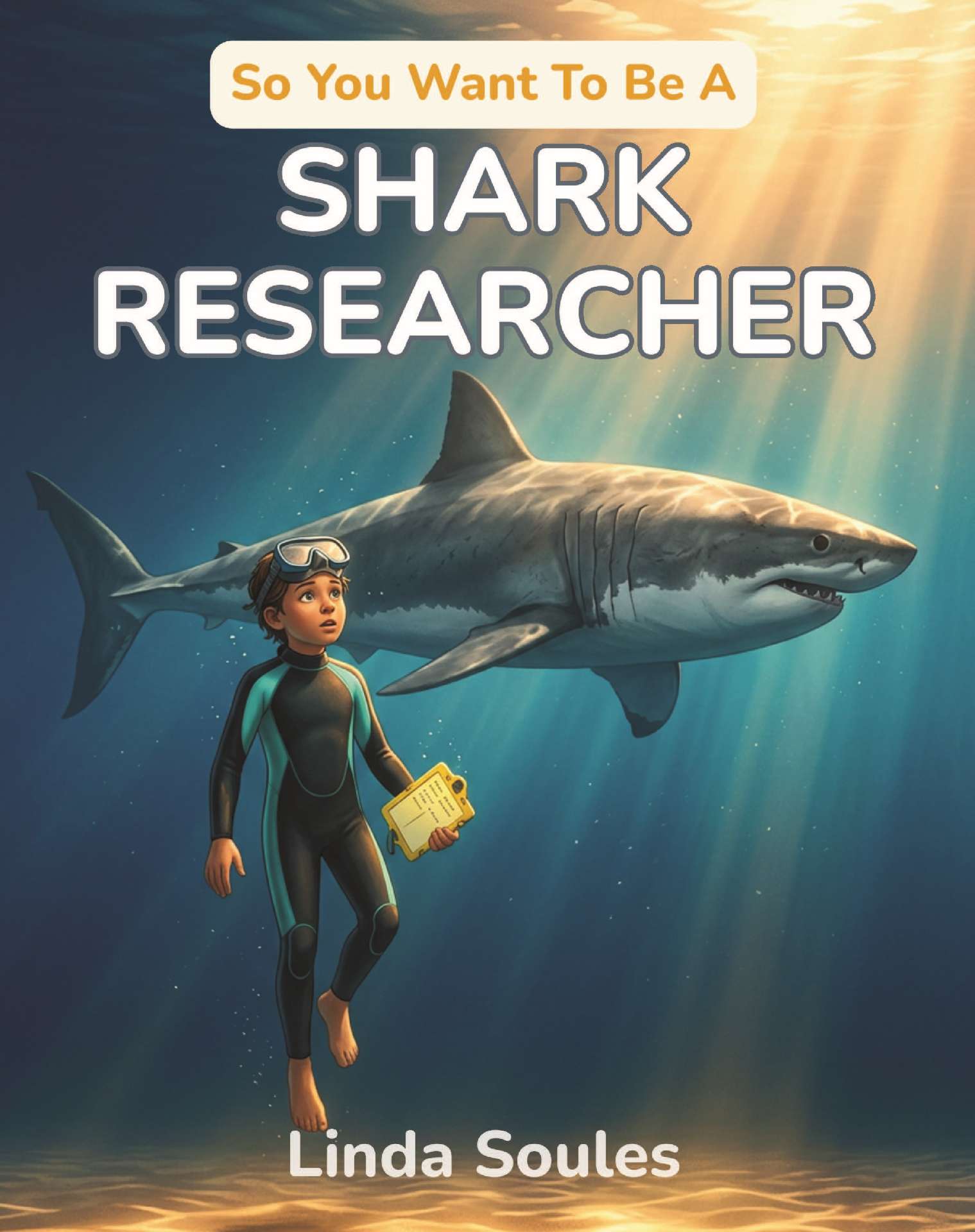
Most people see a shark fin and swim the other way. You grab your underwater camera, your data tag, and your research question — and swim toward it.
So You Want To Be A Shark Researcher is the ultimate guide for young readers ages 10 to 14 who want to know what it truly takes to study the ocean's most misunderstood apex predators. This is not the made-for-TV version of shark science. This is the real thing — patient, precise, and conducted entirely on the animal's terms. If your idea of fun is learning how a great white navigates an entire ocean basin, this book was written for you.
Inside these richly illustrated pages, you will discover fun facts about shark biology that most adults do not know — how sharks have been perfecting their existence for four hundred and fifty million years, how tiger sharks hunt across geographic ranges that span thousands of miles, and why almost everything the world believes about these animals is wrong. From hammerheads to whale sharks, every word and every illustration guides you deeper into the real science behind each species. This is not a coloring book or a collection of mazes and activities — it is something far more valuable. It is an honest look at one of the most important careers in the ocean.
But this book goes beyond facts and species profiles. It walks you through the physical demands of open-water research, the scientific rigor required to gather population data, and the urgent conservation crisis facing shark populations on a national and global scale. Sharks are disappearing faster than scientists can study them, and the researchers fighting to reverse that decline need sharp minds, steady nerves, and genuine passion. You will follow the full arc of the work — tagging expeditions, behavioral studies, laboratory data analysis, and the passionate scientific advocacy that shark conservation demands.
What makes this the ultimate shark career book for kids is what it refuses to do. It does not talk down to young readers. It does not simplify the science into something unrecognizable. It brings you all the way inside the field and treats you as someone capable of understanding all of it — the geographic scope of migration research, the word-by-word precision of scientific reporting, and the real activities researchers perform every single day in the water. Among the many guides to marine life written for young people, this one stands apart because it tells the truth.
For the kid who watches a fin cut the surface and feels not fear but a specific hunger to know more. The ocean's oldest predator has survived five mass extinctions. Now it needs something it has never needed before — someone to speak for it.
Reviews
So You Want To Be a Shark Researcher is the rare kids' nonfiction book that refuses to talk down to its reader. It's equal parts invitation and wake-up call: sharks are magnificent, misunderstood, and disappearing, and curiosity can be a real kind of help. This book works less like a plot and more like a guided plunge into a real life and real work. Soules starts with the dream (blue water, ancient predators, big questions) then steadily replaces movie-myth fear with field reality: tagging operations, long hours of data entry, patient observation, and the sobering math of conservation (humans kill about 100 million sharks a year; sharks kill fewer than ten people annually). My favorite moments are the ones that feel overheard from the deck of a research boat, especially the description of being near a large shark and feeling not terror, but reverence: 'time itself' moving through the water. Soules keeps the spotlight on the people doing the work, from on-deck crews and divers to data folks and fishers, alongside names like Eugenie Clark and Samuel Gruber. The voice stays steady and conversational, and it's especially good when it explains how to study sharks without harming them. A few sections slide into checklist mode, but they pass quickly. By the end, the book left me feeling steadier about sharks, and more demanding of the stories we tell about them. For readers roughly ages 8-12 (and the adults reading along), it's a smart, stirring place to begin.