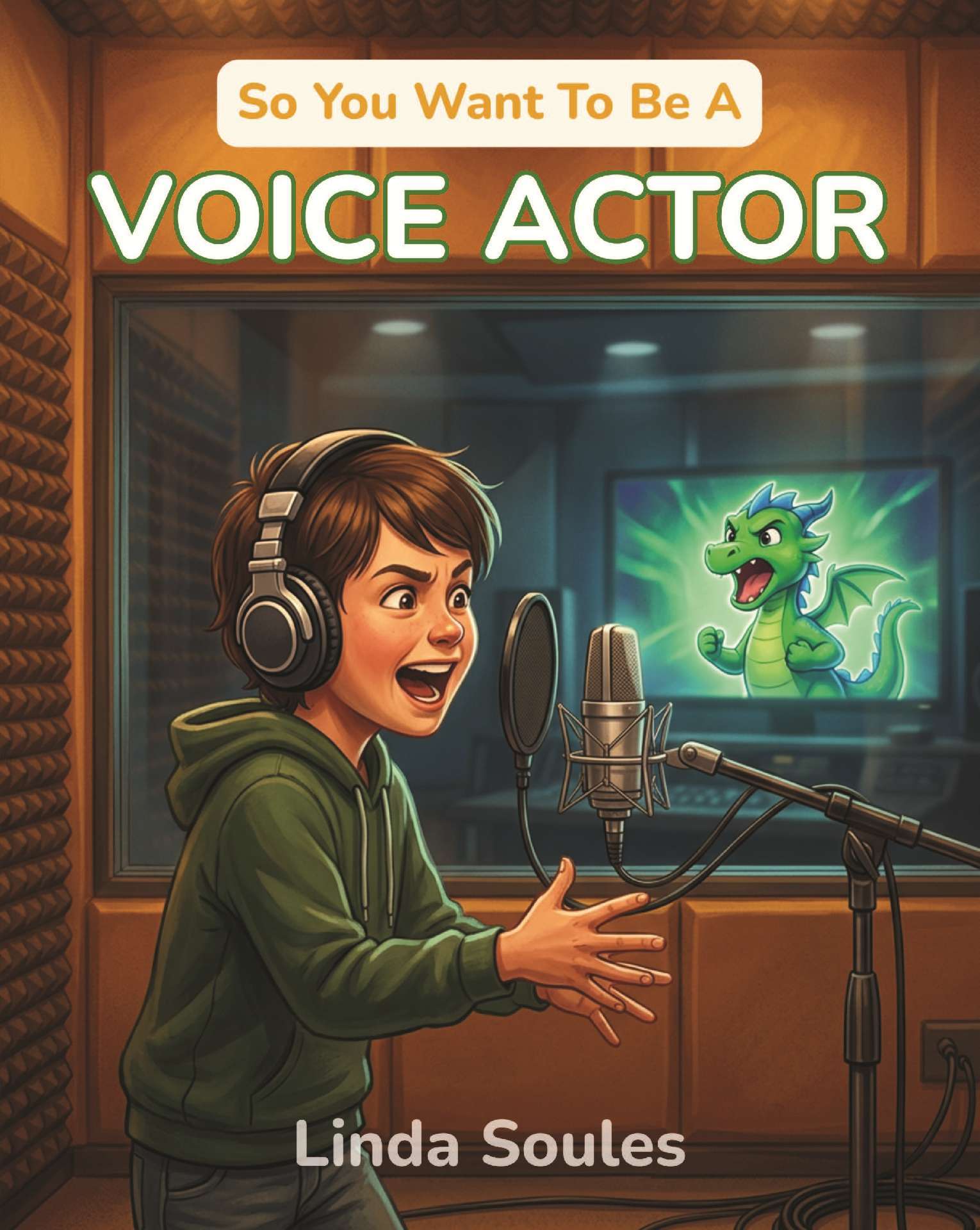
So You Want To Be A Voice Actor - So You Want To Be A... 27
Formats: E-Book, Paperback
Ages: 8-11, 12-15
No one will see your face. No costume, no stage, no spotlight. There is a microphone, a script, and a booth the size of a closet. And from that closet, you will make someone believe in a dragon, a villain, a hero, a talking car — a character who exists nowhere in the physical world except in the sound of your voice.
That is the magnificent reality of being a voice actor, and this illustrated nonfiction guide brings young readers ages 10 to 14 all the way inside it — not the cartoon version of the career, but the real one.
Discover what voice acting actually demands: the years of vocal training before a performer ever books a professional job. The discipline of building a complete, emotionally alive character using nothing but breath, resonance, and imagination — no body language, no set, no scene partner to play off. Just the voice and everything it can do. You will meet the directors, sound engineers, casting agents, and animators who work in careful coordination so that the character on screen and the voice in the booth become a single living thing for the audience.
This book covers the full range of voice-over work — from animation and video game characters to audiobook narration, commercials, and dubbing — and explains what each type of performance demands. You will learn how the human voice works as an instrument, how voice actors train it with precision, and how they protect it across a career that can span decades. You will explore the history of voice performance and the legendary actors whose characters became part of the cultural fabric of childhood for generations.
But this is more than a career guide. It is an honest look at what the work costs, what it gives back, and why so many voice actors say the same thing: the moment a character they created makes a kid laugh, or gasp, or feel less alone — that invisible moment is worth everything.
For the young reader who gives every character a different voice, every story a different sound, every room a running inner performance. For the kid who feels a pull toward something that lives entirely in sound, where imagination is the only special effect. Inside these pages, you will find out what it really takes — the vocal technique, the recording technology, the audition process, the creative fire — and whether this calling might be yours.
Every unforgettable character began as silence. Then a voice actor opened their mouth. Maybe the next voice the world remembers is yours.
Ages 10 to 14. Illustrated nonfiction. Careers and professions.
Reviews
Not long ago, it seemed every kid wanted to be a nurse, a firefighter, or a teacher when asked what they wanted to be when they grew up. These days, children tend to dream about creative, tech‑driven, and high‑visibility careers. An influencer, game developer, or pro athlete might top their list. In So You Want To Be a Voice Actor, Linda Soules invites young audiences to consider a field that has shaped their lives without their even realizing it: voice acting. After all, what would our favorite animated film be without the skilled performances that bring the characters to life? And it’s difficult to imagine a commercial without the voice-overs that sell the product. Soules writes with a steady respect for her audience, pairing encouragement with a clear‑eyed look at the demands of the job so young readers can imagine a future that truly fits them. While it may not be a flashy career, working as a voice actor is certainly high-impact, and this beautifully illustrated guide might just inspire your child to pursue it. With a natural flow and a clear sense of purpose, this thoughtful book walks readers through the fundamentals of voice acting. The text conveys a confidence that allows kids to take themselves seriously, even as beginners. Soules explains what the job entails, what working conditions are like, and who an artist might work with, even offering a helpful list of activities that give readers a small but genuine taste of the craft. With a perfect balance of practical detail and kid‑friendly clarity, this book is an excellent fit for any career-curious students, and is surprisingly engaging for those of us beyond that range! The illustrations are especially warm and inviting. Whether it’s the pop shield and acoustic panels found in a recording booth or a depiction of the wide range of characters an actor might voice, the artwork shows just how much care went into bringing these concepts to life. The result is a motivating, educational, and impressively well‑rounded introduction to a potentially overlooked option. Reframing an intriguing job that has touched our whole lives, but is rarely considered, So You Want To Be a Voice Actor is the book you wish you’d had as a kid, and one you’re glad to pass along to kids who might dream bigger because of it.
Maya Angelou said, 'Words mean more than what is set down on paper. It takes the human voice to infuse them with deeper meaning.' In So You Want to Be a Voice Actor by Linda Soules, readers are invited into the creative and often surprising world of a voice actor. This children's book makes it clear that performers don't just "do funny voices," but instead think about who the character is and how they feel. It also explains the important role that tone, pitch, rhythm, and even breathing play in shaping a believable performance. Other sections highlight where voice actors work, the tools they use, and what a typical day might be like. In addition, another part discusses the fun and challenging aspects of the job. Toward the end, there's helpful information on famous voice actors, fun facts, ways to prepare for the job, and key vocabulary to better understand the field. So, are you ready to be a voice actor? I really enjoyed So You Want to Be a Voice Actor by Linda Soules. This is the second book in the series that I've read, and I was excited to see another career explained in such a thoughtful way. It was packed with information, but it never felt overwhelming. It actually got me thinking about how I read aloud to students and even brought back memories of my dad reading to my brother and me. Before starting this one, I hadn't given much thought to what a voice actor's day would be like, which often includes recording alone without other actors and taking care of their voices and throats. From an educator's perspective, this would be a great addition to a classroom library, especially during a careers unit, because it opens kids' eyes to a job they may not have considered before. The illustrations are so vibrant and lifelike. They will keep children engaged from beginning to end. My favorite is early on with the wizard—it really pulls you in. Overall, I think this is a fun (maybe even magical) read that even taught me something new. Fans of creative, behind-the-scenes books will love this detailed but enjoyable look at voice acting.
So You Want To Be a Voice Actor is smart, encouraging nonfiction that talks to kids like they're already artists. It makes a creative career feel exciting, but it also shows the real work behind the 'funny voices,' which is exactly what makes it trustworthy. This isn't a plot-driven book. It's more like an inviting behind-the-scenes walk into a recording booth. Linda Soules explains how voice actors build characters using pitch, pace, breath, and (most of all) genuine emotion, reminding readers that microphones 'hear everything.' The book's strongest moments feel like stories shared across the kitchen table: a teen reading four characters to a younger sibling, then hearing, 'I can see them.' That line lands, because it captures what kids already know from cartoons and bedtime books. Voices can make imaginary people feel real. As a parent, I loved how often it quietly nudges practice into everyday life: reading aloud, trying one sentence in five emotions, warming up your voice, and noticing how a smile changes sound. Soules's style is clear and lyrical, with short sections that keep 10 to 12 year olds moving while still giving adults something to think about. The practical advice is solid, and the tone stays respectful. The heart of the book stays strong. If you want a nonfiction read that builds confidence, creativity, and empathy, without talking down, this is an excellent choice. It's a sweet fit for family reading, and it may even turn your next bedtime story into a tiny, joyful voice-acting lesson.