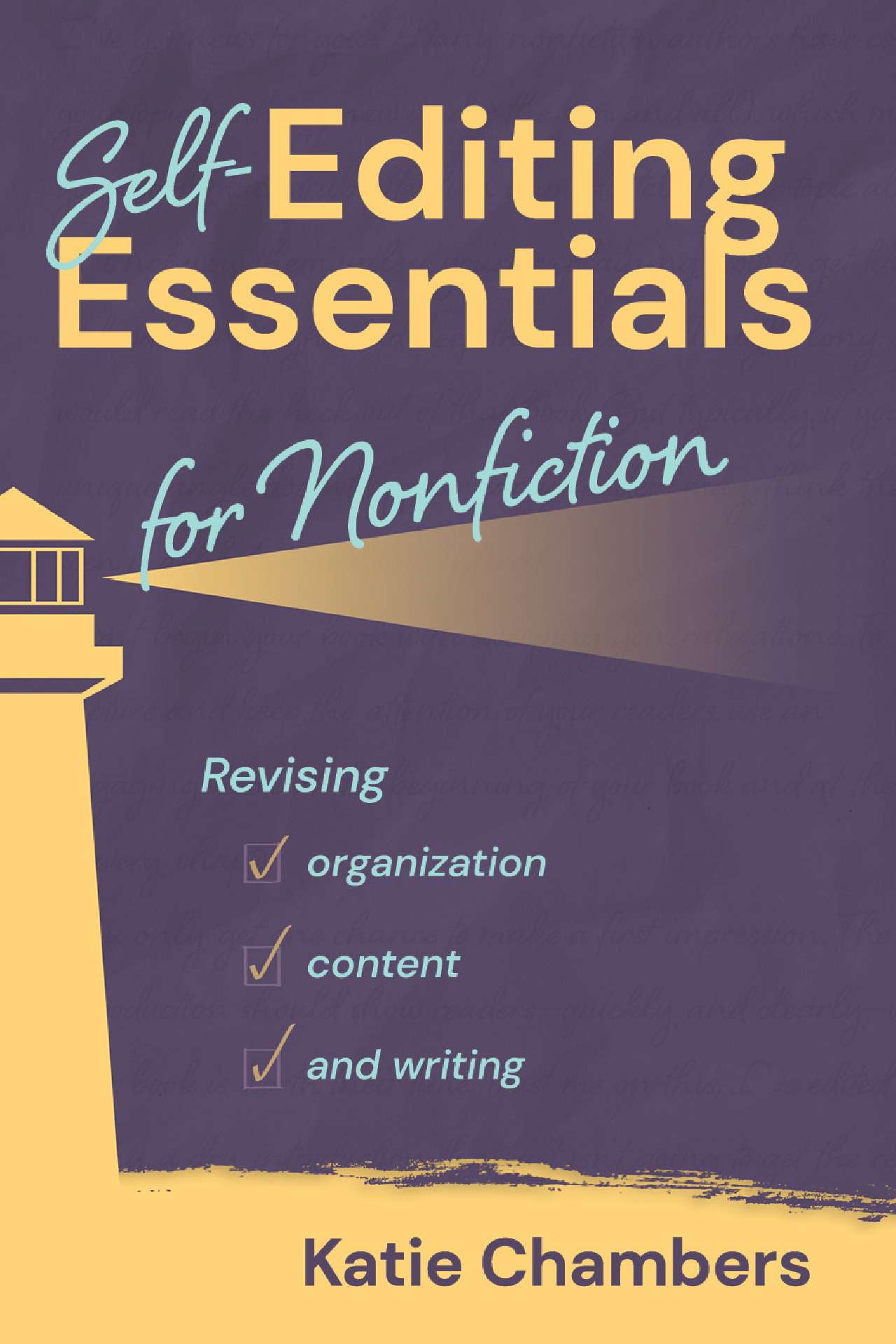
Self-Editing Essentials for Nonfiction - Self-Editing Essentials
Formats: E-Book
You wrote an entire book. That’s freaking amazing.
Now comes the part that terrifies many authors, or the part they just skip altogether: self-editing. This step is crucial to ensuring
• your expertise comes through clearly
• readers stay engaged from introduction to final chapter
• potential clients actually finish—and remember—your book
This self-editing nonfiction guide gives you the confidence that won't happen, as it helps you bridge the gap between your brilliant ideas and a polished, reader-friendly book.
This guide helps you refine your straight nonfiction writing (not memoir or creative nonfiction—we're talking expertise-driven books where you teach, guide, or share your knowledge), giving you the tools to ensure your message lands with clarity and impact.
Written by a professional book editor and former teacher who's helped bring nearly 300 books to life, this guide gives you a flexible self-editing toolbox. You choose which of the 21 topics your manuscript needs most across four internal editing passes:
• Content Pass—strengthen your introduction, eliminate unnecessary repetition, clarify your message, and ensure you deliver on your promises
• Organization Pass—fix confusing structure, create logical flow, add transitions that actually connect your ideas
• Writing Pass—cut the fluff, sharpen sentences, maintain tone without sounding like a robot
• Technical Pass—clean up grammar, punctuation, citations, and capitalization before your editor sees it
The payoff? When you give your editor a stronger draft, they can take your book further. You get a better-quality book with greater impact, and you control costs by reducing professional editing time.
One ghostwriter and hybrid publishing CEO called this book "the New Elements of Style" for a reason. Because good writing is rewriting. And self-editing isn't just about catching typos; it's about honoring the expertise you poured into your manuscript and making sure your readers actually experience it.
Ideal for experts, coaches, entrepreneurs, and other nonfiction authors who want to create a reader-friendly book that keeps their credibility intact and ensures their important message comes through clearly and confidently.
Stop second-guessing whether readers will make it to the end. Buy now and start self-editing your nonfiction writing with purpose to transform it into a high-impact book that does justice to your expertise.
Reviews
This is an amazing resource! I love that it's loaded this with examples, the before/after section makes a huge difference in delivering the lesson. If I had to sum this book up in one sentence: "Self-Editing Essentials for Nonfiction" is the new "Elements of Style" for any writer looking to improve their craft.
This is the kind of guide you keep open while you revise, not something you read once and forget. "Self-Editing Essentials for Nonfiction" breaks the editing process into clear, manageable decisions, helping you strengthen what you say, how you structure it, and how smoothly it reads. What I appreciated most was the focus on the nonfiction realities that trip writers up, like clarifying purpose, tightening scope, improving the flow between sections, and making sure every chapter earns its place. The prompts feel practical, not academic, and the approach makes it easier to spot what’s working, what’s repetitive, and what’s missing. I also liked how it distinguishes between big-picture revision and sentence-level polish, so you’re not proofreading a draft that still needs structural changes. If you want a straightforward, confidence-building process for revising your nonfiction manuscript, this is a strong resource to have on hand.
Self-Editing Essentials for Nonfiction is as entertaining as it is informative. Katie has a down to earth, reassuring writing style. She provides lots of examples to help readers self-edit; whatever your editing "problem," you'll find a solution here. When writers are strong self-editors, their books are more impactful for their readers. Everyone wins. Every writer looking to be a stronger editor (re: a stronger writer) should read this book!