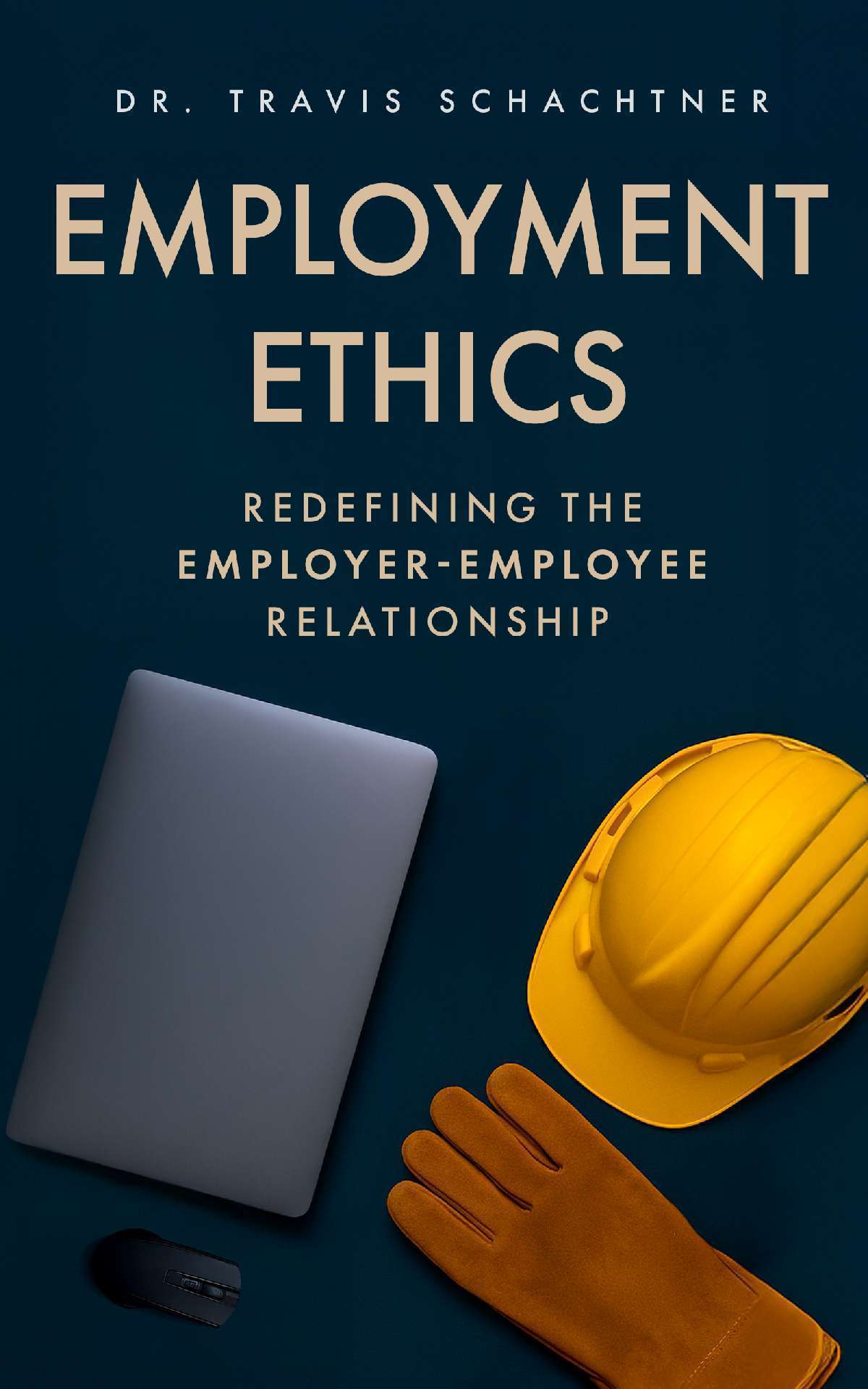
Employment Ethics: Redefining the Employer-Employee Relationship
Formats: E-Book, Paperback
Ages: 18+
What makes a job ethical? Who truly holds power in the workplace? And why does it matter now more than ever?
In Employment Ethics: Redefining the Employer–Employee Relationship, these questions form the foundation for a fresh perspective on modern work. For too long, ethical responsibility has been unfairly placed on workers, while employers—driven by profit and protected by power—often avoid accountability. This book challenges that imbalance by redefining employment as a transactional relationship, not a personal favor or moral crusade.
Drawing from real-world examples, historical context, and foundational principles such as Maslow's hierarchy of needs, this book offers a clear, accessible guide to understanding what ethical employment should look like in practice.
Inside, you'll discover:
● The four core pillars of work ethic—and how they're often exploited
● Why employers are not inherently leaders—and shouldn't be treated as such
● The hidden cost of toxic and imbalanced workplace dynamics
● What employer ethics are—their history and why they matter
● Practical tools for evaluating your current employment relationship
Whether you're a gig worker, office employee, frontline nurse, or engineer, Employment Ethics empowers you to recognize unethical practices, demand better, and understand your value in any workplace.
Employment ethics is more than just fair wages and inclusion. It is employee well-being, employer legacy, and community sustainability.
Let’s redefine our relationship with work…on our terms.
Reviews
Employment Ethics: Redefining the Employer-Employee Relationship is an excellent guide for both job-seekers and employees who are at a crossroads in their career. It is an easy-to-read book that defines employment as a transactional relationship and explains the power dynamic in the workplace. The author provides a brief history of workplace cultures over the past 150 years and major events that caused cultural changes. Employment Ethics explains how some workplaces (or managers) exploit workers in ways that aren’t commonly recognized or acknowledged. There are chapters on discrimination, quality, safety, wages, and benefits. The author provides short examples using people in a variety of occupations, including factory workers, construction, retail, trucking, office settings, and gig workers. He also references labor laws around the world, so the material is not limited to readers in the United States. I found the discussions on the hidden cost of toxic and imbalanced workplace dynamics to be particularly helpful. I recognized situations from previous employers and wish that this book had been available 20 years ago. Employment Ethics is full of practical tools to help people evaluate their current employment situation and recognize unethical business practices. This book is a helpful resource and belongs on the shelf of all public libraries and company libraries. As a retired safety, health, and environmental professional, I appreciate the author’s emphasis on an employer’s responsibility to provide a safe work environment to their employees. While Chapter 5 was devoted to safety, workplace safety was mentioned throughout the book. My only criticism of Employment Ethics is that the author lumped “gig workers” and “temporary workers” together. From my viewpoint, gig workers are people who are independent contractors who accept individual assignments, working for DoorDash, Uber, InstaCart, and freelance-type work. Conversely, some employers use temporary agencies to screen and try-out potential employees, often for a 60- or 90-day period. What I have personally witnessed and experienced is that some employers have no intention of ever hiring the temporary workers as permanent employees. Instead, the temps work side-by-side the permanent workers while earning a lower wage and receiving no benefits for years, while being promised a permanent job at some unspecified future date. With the sunken-cost fallacy, the temp worker tries to stick it out, since they have invested so much time at the employer site. Additionally, the temp workers are often given the least desirable job tasks with little training and safety equipment, and the temporary agency doesn’t have the oversight or knowledge of the workplace hazards.
Exceptional, informative, inspiring, and impressively well written, organized and presented, "Employment Ethics: Redefining the Employer-Employee Relationship" by Travis Schachtner is especially and unreservedly recommended for personal, professional, community, union hall, corporate, and college/university library Business Ethics collections and supplemental curriculum studies lists. It should be noted that this paperback edition of "Employment Ethics" from FTS Leaders is also available in a digital book format.
A worker’s guide to getting fair treatment and holding employers accountable. In this book, Schachtner, a technical and community college instructor, aims to “help workers better understand their rights, responsibilities, and the larger systems at play” that affect the relationship between employee and employer. He emphasizes that the nature of that relationship is purely transactional, “a business arrangement where both parties have something valuable to offer,” rejecting the notion that employment is a form of benevolence where companies “give” jobs to workers. He defines employment ethics as “fundamental principles that establish basic workplace ethics, safety, and sustainability worldwide,” and as “tangible factors that affect your daily life, financial stability, and well-being.” Each chapter focuses on a specific aspect of the employment relationship. First comes work ethic, which has four basic components: productivity, reliability, autonomy, and collaboration; each are discussed in detail. Chapter 2, “Employers Are Not Leaders,” explains the difference between management, which focuses on day-to-day processes and efficiency, and leadership, which is people-focused and needed in challenging times. The third chapter applies the Maslow’s Hierarchy of Needs framework to employment. Next, the author stresses the importance of a balanced relationship, noting differences between long-term and short-term/gig work and the problem of misclassification. The middle of the book tackles workplace safety and security, corporate accountability, and environmental responsibility. Chapter 8 makes the case for “community-supporting” wages. Chapter 9 reviews Maslow’s principles, and what happens when employer ethics fail. Chapter 10 and the conclusion serve as a call to action and outline how to advocate for change. All chapters end with reflection questions to help readers evaluate their own workplaces, such as, “Are your ideas and input respected in team settings, even if you are not in a leadership role?” There is also a reference list of the author’s research sources. Throughout the book, Schachtner portrays the employer-employee relationship as heavily one-sided, where a worker’s loyalty is often demanded but rarely reciprocated: “For too long, the burden of the employment relationship has been placed exclusively on employees.” He details the myriad problems that occur when employers are unethical, including infamous historical catastrophes like the Triangle Shirtwaist Fire, Deepwater Horizon oil spill, Chernobyl reactor meltdown, Monongah coal mine and Bhopal chemical plant explosions, and violent union busting. The author asserts that the regulations created in response to these and other workplace tragedies are essential for holding employers accountable and without enforcement by government watchdog agencies, companies would be free to exploit and endanger employees, communities, and the environment in the pursuit of ever-higher corporate profits. Other than mentioning freelance work for corporations and the issue of misclassification of gig workers, the only form of employment described is traditional jobs in for-profit industries. The author doesn’t mention government or nonprofit employers, although some of the issues might also apply to them. Schachtner’s writing is clear and straightforward, but he often repeats key points, for example, variations on the sentence “Recognizing ethical gaps is the first step toward advocating for change” appear in nearly every chapter. The book’s conclusion provides a partial list of resources such as OSHA, ISO, and Safe Work Australia. It makes a persuasive case that government regulations, oversight, and enforcement are necessary and worker advocacy, both individual and collective, is essential for a well-functioning society. A practical, cleareyed, albeit repetitive, resource.