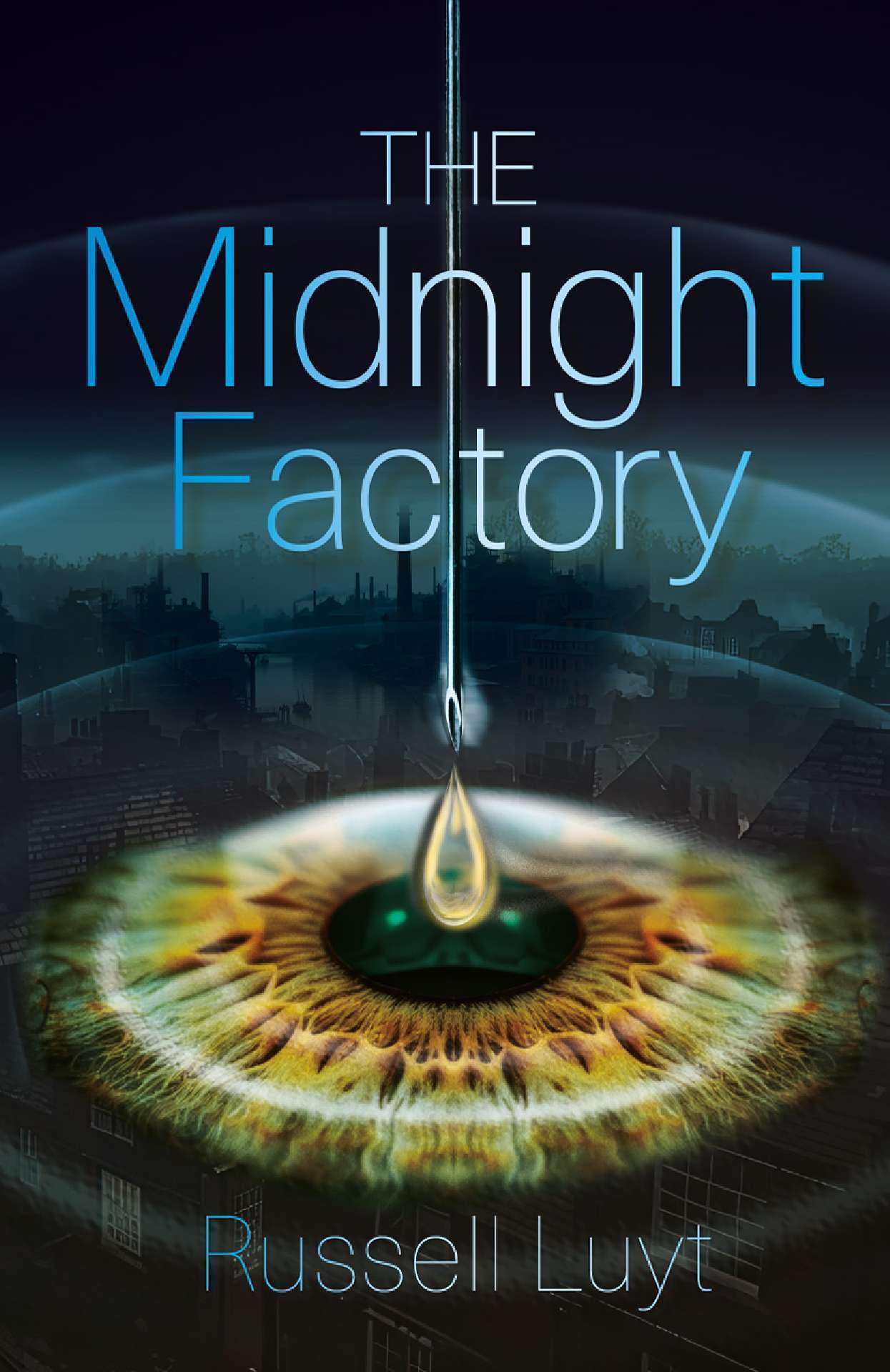
The Midnight Factory - The Shimmerfall Trilogy 1
Formats: E-Book, Audio, Paperback, Hardback
Shimmer makes you forget—until it takes everything.
In the rain-soaked country of New Albion, forgetting has become a way of life. Shimmer offers brief escape from fear, hunger and grief. It also keeps the population obedient, numbed and watched.
Anouk Walker isn’t looking for revolution. She’s only trying to survive, one dose at a time. But when a late-night raid tears her closest friend away, survival is no longer enough. Someone she loves is disappearing, piece by piece, inside a system designed to make people look away.
As Anouk searches for a way to bring him back, she is forced deeper into a world of state violence, institutional control, and impossible choices. Memory is fragile. Loyalty is dangerous. Even hope carries a cost. The more she learns, the clearer it becomes: escape and control are inseparable—and no one walks free without leaving something behind.
A dark, emotionally charged dystopian novel about addiction, complicity, and the price of resisting a system built to break you.
Perfect for readers of intelligent, character-driven dystopian fiction.
Reviews
THE MIDNIGHT FACTORY is an ambitious work of fiction that blends philosophical inquiry with an atmospheric disposition. Author Russell Luyt constructs a dense, sometimes unsettling narrative that interrogates memory, identity, and the ethical boundaries of technological progress—inviting readers to engage with its peculiar ideas as much as the events that unfold from them. The novel’s greatest strength lies in its conceptual originality. Luyt creates a suspicious institution where human thoughts and memories can be extracted, stored, and transformed. He uses this premise as a lens through which to examine the topic of human autonomy and the concept of the self. Rather than relying on conventional spectacles of this genre, the author emphasizes mood and implication—creating a persistent sense of unease that mirrors the protagonist’s growing disorientation. The setting itself serves as a mirror to the book’s themes, reinforcing the notion that systems, both mechanical and societal, can quietly and slowly subsume the individual. With descriptive language that makes its way into the intricate depths of the novel, THE MIDNIGHT FACTORY achieves its emotional weight not through overt sentiment but through controlled language, industrial imagery, and a persistent sense of looming consequence. The following passage is merely one of many examples: “Jimmy described the sound of grass sweeping against his legs and the feel of its sleek florets over his fingers; the rare, indulgent late-summer light falling across swaying stalks and drifting pollen stirred by his steps.” Luyt demonstrates a strong command of tone, maintaining narrative cohesion even as the story veers into abstract territory. The pacing, however, may test some readers’ patience. The author prioritizes introspection and atmosphere over narrative urgency, which occasionally slows the story’s momentum. While this approach suits the novel’s philosophical aims, it may limit its appeal for readers expecting a more active, plot-driven reading experience. Characterization is subtle and restrained yet layered. The central figure is rendered with psychological depth, though emotional distance can sometimes make engagement feel intellectually foreign rather than visceral. Secondary characters function more as thematic compliments than fully realized personalities, reinforcing the novel’s conceptual focus but sacrificing some aspects of relatability. While this trade-off is consistent with the book’s objectives, additional character development could have strengthened the reader’s investment. THE MIDNIGHT FACTORY is polished, with strong structural coherence and minimal distractions in terms of language or formatting. The novel’s ideas linger well beyond its end, encouraging post-consumption reflection rather than delivering instant gratification. Luyt’s work is best suited to readers who appreciate speculative fiction that challenges assumptions and rewards inquisitiveness. Overall, it succeeds as a thoughtful, intellectually driven novel that contributes meaningfully to contemporary experimental literature—even if its measured pacing and abstraction appeals to a smaller alcove of readers. In THE MIDNIGHT FACTORY, Russell Luyt delivers a conceptually rich and atmospherically controlled novel that favors the desire for deeper understanding over narrative speed. This is a strong choice for readers drawn to reflective, idea-driven speculative fiction. Reviewed by Alana M. Kelley for IndieReader
Russell Luyt's The Midnight Factory unfolds in New Albion, a world ruled by fear and control. After a political event—known as the Great Change—takes effect, the Bureau for Virtue becomes the governing body that regulates New Albion through surveillance, propaganda, and an addictive drug called shimmer. This captivating story follows Anouk and Jimmy, two drug-dependent friends living on the margins of society. One night, after witnessing a terrifying public execution with their own eyes, Anouk and Jimmy are forced to fight for their survival. When they become separated, Anouk joins the Resistance, hoping to rescue Jimmy. She uncovers shocking secrets that make her question everything she thought to be true. In the end, can Anouk and her allies defeat the Bureau once and for all? Or will the Bureau destroy their hope for freedom? The Midnight Factory is a dystopian sci-fi story that will grab your attention from start to finish. Through Anouk's and Jimmy's compelling journeys, this novel shows what it means to hold on to hope in a world that feels like it's beyond saving. What stood out to me the most was how authentic Anouk's and Jimmy's characters are. Their pain, fears, and small moments of bravery make the story hit hard. Russell Luyt doesn’t just describe a fractured society ruled by an oppressive governing force; he also demonstrates how drug addiction can destroy that society even further. Despite the bleakness of Anouk's and Jimmy's situation, this story isn't one of hopelessness. It shows that through small acts of kindness—and even through courageous acts of defiance—hope can still shine in the darkest of places. I found this book emotionally moving and thought-provoking. I recommend it to all dystopian sci-fi fans. Reviewed by Jefto Pierre for Readers' Favorite
In New Albion, the rise of extreme nationalism has led to the creation of a surveillance state, where any non-conforming citizen can be imprisoned or killed for any minor infraction, often just for existing. Under the motto "For Higher Virtue", the Bureau for Virtue and its red jacket employees patrol the streets to ensure everybody stays in line, regularly rounding up offenders to fulfil the state quotas. Illegal immigrants, members of the LGBTQ+ community and drug addicts are easy to target and blame for any societal problems. For many people, the only escape is shimmer, a drug that produces euphoric bliss when dropped into the eye. For best friends Anouk and Jimmy, using shimmer, known as spritting, allows them to forget the loss of their loved ones, their awful family life, the constant control, and the grim, dark, rainy streets of their city. Anouk is tough and brutally honest where Jimmy is gentle and caring, and their bond runs deeper than friendship - they sprit together and try to survive together, sharing the burden of a bleak existence. When the Bureau for Virtue raids the night club where they are enjoying their latest fix of shimmer, Anouk is saved from capture through the intervention of an unusually vigilant drug dealer, while Jimmy is whisked away as a degenerate, his fate to be determined by the Bureau. A forced-labor facility would be the kindest choice, especially compared to the rumored horrors of the Midnight Factory. The story is told at a masterful pace, with bits of worldbuilding slowly revealed as the characters move through their grim world. Anouk's mother is a deeply tragic character, reduced to a caricature by circumstances, and Jimmy's memories of his aunt hint at a long-forgotten world ground to dust by the awful societal changes. The double standards and alleged virtue of the Bureau are explored wonderfully through the brutal, cowardly and lecherous character of its Senior Superintendent Kilgore. In this darkness, each revelation about the true nature of the world hits like a gut punch - the reality of the economy the government has encouraged and the role of the Resistance, who are themselves forced to be morally gray and do what they can, biding their time in a living nightmare. Worst of all are the nauseating horrors of the Midnight Factory itself, designed to push humanity to the brink. The truth about where shimmer comes from is sickening. Anouk's first goal is to save Jimmy from the clutches of the Bureau, but as she discovers more about the forces that control her awful world, she has to choose between fighting insurmountable odds for a tiny bit of hope of seeing the light, or the blissful forgetfulness of shimmer. Loyalty and trust are rare and come at a cost, as the system has cruelly made it easier than ever to turn on the ones you care about to escape punishment. Jimmy's goal is to survive a reality that slowly extinguishes the light of his life, literally and figuratively. The way the story plays with the concepts of darkness and light is absolutely haunting, and the vivid descriptions are gritty, visceral, stomach-turning at times - this dystopia feels more than political: it's intimate and creeps under the skin. The account of how the extreme nationalists came to power is bone-chilling in a way that hits way too close to home in the world we currently live in. In the midst of the horrors, loyalty, care and humanity shine through. Reviewed by Viktorija Blazheska for Reedsy Discovery