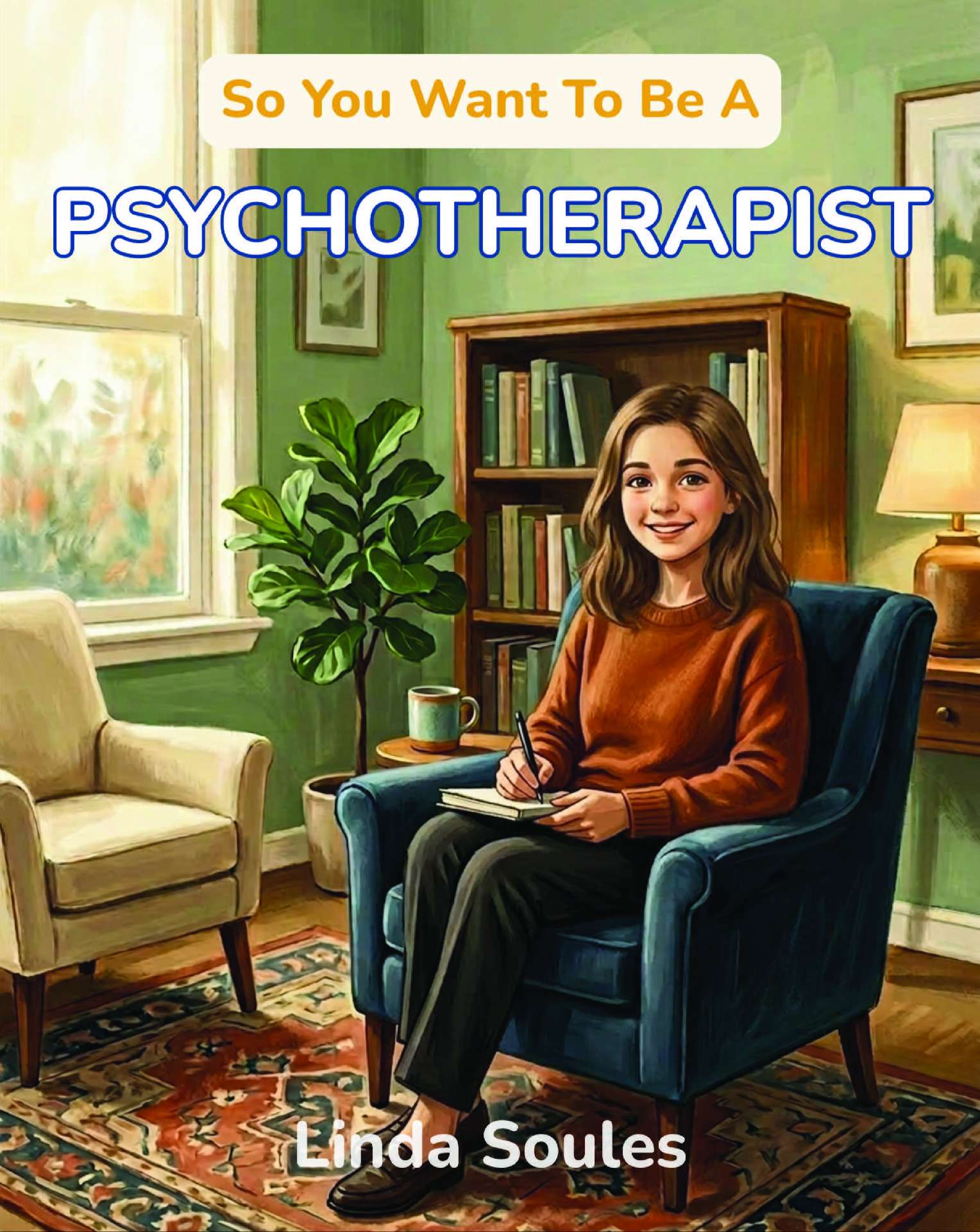
So You Want To Be A Psychotherapist - So You Want To Be A... 45
Formats: E-Book, Paperback, Hardback
Ages: 5-8, 8-11, 12-15
WINNER of the Literary Titan Gold Book Award
From the So You Want To Be A… Series — 2026 Purple Dragonfly Book Awards, Grand Prize Winner
Imagine a job where your most powerful tool isn't a scalpel, a computer, or a fire truck — it's the way you listen.
So You Want To Be A Psychotherapist invites curious kids into one of the strangest, most surprising careers there is: the work of helping people heal through careful, honest conversation. No talking down. No sugarcoating. This is a career book that treats young readers as intellectual equals — honest about the small private victories and the hard parts of a life spent in a small room with two chairs.
Inside, readers discover:
What a psychotherapist actually does all day — and why listening, not advice-giving, is the real skill
Where therapists work — from cozy offices to schools, hospitals, video calls, and even barns full of horses
The tools of the trade — the two chairs, the tissue box, the fifty-minute hour, and the "doorknob moment" every therapist knows
The best parts of the job and the hardest, told with rare honesty
A real day in the life, from morning tea to the moment the work stays at the office
Trailblazers who changed the field — Carl Rogers, Mamie Phipps Clark, Virginia Satir, Marsha Linehan, Anna Freud, and Derald Wing Sue
The qualities that matter most — deep listening, emotional steadiness, curiosity, and self-awareness
Fun facts, a "Could This Be Your Job?" quiz, a kid-friendly glossary, and where to learn more
Part of the acclaimed So You Want To Be A… series, this richly illustrated introduction to psychology, empathy, and mental health is written for ages 10–14, yet lingers happily with younger readers and sparks real conversations for the whole family. It's the perfect gift for the empathetic child — the one their friends come to, the one who holds a silence a beat longer than everyone else.
Somewhere out there, a person you haven't met yet is having a hard week. One day there will be two chairs in a room, and one of them could be yours.
The chair will be waiting.
Reviews
Linda Soules shows ages 10 to 12 that a psychotherapist's main instrument is careful attention in a quiet space with two chairs, not a machine or a couch. Parents reading along will find that framing useful at home as well. The book walks through the whole shape of the work: what a session sounds like, confidentiality and the boundaries that protect the hour, and the many roads in, from counselors and social workers to psychologists and psychiatrists. It explains approaches like CBT and EMDR, clinical notes, supervision, and play tools such as sand trays and puppets for children who cannot yet name a feeling. There are profiles of figures like Carl Rogers, Mamie Phipps Clark, and Marsha Linehan, a day-in-the-life walkthrough, a glossary, and a closing self-check. The school counselor pages stand out for families: knocking on that door needs only something on your mind, not a full crisis. Soules' voice stays plain and close, more conversation than lecture, built from small office facts that stick: the hallway white noise machine, the tissue box left within reach, the fifty-minute session. Illustrations give young readers a visual hold on the setting while adults pause to talk. In the So You Want To Be A series, this title treats mental health care as ordinary, not strange or shameful. The book's strength lies in treating a school counselor's office and a psychiatrist's with equal narrative weight, which quietly corrects the assumption that therapy is only for crisis. Give it to the kid who already holds a silence longer than friends expect, and keep it nearby for the adult who wants steady language for those talks.
So You Want To Be A Psychotherapist by Linda Soules is another excellent addition to the So You Want To Be series. Two chairs in a quiet room; that's what it takes for lives to start changing. Imagine a job that doesn't revolve around vehicles, tools, or computers but around how you listen to others. This book invites young readers to delve into a career where understanding, empathy, and listening skills are the most important tools. It explains what a psychotherapist does, what it takes to be one, and why it's such an important job, especially in today's fast-paced, high-powered, busy lives. Readers will learn what tools they use, what a day in the life of a psychotherapist looks like, and the challenges and rewards that come with the job. They'll meet famous psychotherapists who shaped the job, and they'll learn the qualities needed to decide if it's what they want to do with their lives. Linda Soules's series just keeps getting better, and So You Want To Be A Psychotherapist is an excellent addition. This wonderfully illustrated book introduces young readers (and older ones) to the work of a psychotherapist, explaining every part of the job in simple, straightforward language. It may not sound like the most exciting of careers for a child, but rather than just a job description, this book treats the subject the same way a therapist treats their clients - with respect, patience, and a deep dive beneath the surface. The book moves smoothly from one topic to the next and includes fun facts, a quiz for readers to take, and a helpful glossary at the end. It's an honest book; it doesn't sugarcoat the challenges of the job, the cost involved in getting there, the hard work, the potential for burnout, and other challenges, but it does so in a way that doesn't discourage readers. If your child is the one their friends turn to, the one who listens quietly without judging or shouting, this could be the career path for them. One day, they'll meet that person having a hard time, and that's when the room with two chairs will be open and waiting.
So You Want To Be A Psychotherapist by Linda Soules is another excellent addition to the So You Want To Be A... series. Rather than focusing on vehicles, technology, or specialized equipment, this career guide introduces children to a profession in which the most powerful tool is the ability to listen. Soules explains how psychotherapists help people understand their emotions and heal through careful, honest conversation. Written for readers ages ten to fourteen, the book treats children as thoughtful equals while presenting mental health and therapy in a warm, approachable, and respectful way. The book offers a thorough look at what psychotherapists actually do, where they work, and what a typical day might involve. Young readers learn about the familiar two chairs, the tissue box, the fifty-minute hour, and the surprising "doorknob moment," when a client reveals something important just as a session is ending. Soules also explores settings beyond the traditional office, including schools, hospitals, video appointments, and barns where therapists work alongside horses. Fun facts, practical listening exercises, a self-assessment quiz, and a kid-friendly glossary make the material informative and engaging. One of the book's greatest strengths is its honesty. Soules doesn't sugarcoat the educational requirements, licensing process, ethical responsibilities, emotional strain, or risk of burnout that can accompany this career. At the same time, these challenges are presented without discouraging readers. The book emphasizes the importance of empathy, curiosity, emotional steadiness, self-awareness, and self-care. It also introduces influential figures such as Carl Rogers, Mamie Phipps Clark, Virginia Satir, Marsha Linehan, Anna Freud, and Derald Wing Sue, showing how different people and ideas have helped shape the profession. The warm, inviting illustrations and straightforward language make So You Want To Be A Psychotherapist accessible to younger readers while offering valuable insights for teenagers, parents, and adults. It's especially well suited to the child whose friends naturally turn to them, the quiet listener who offers patience rather than judgment. The book may also reassure young people who feel nervous about attending therapy by showing that psychotherapists are caring professionals trained to listen and help. Realistic, encouraging, and deeply compassionate, this career guide invites readers to consider whether one of those two chairs in a quiet room might someday be theirs.