The Burning Word
Formats: E-Book, Paperback
Ages: 18+
The Burning Word is a profound collection of Christian poetry born out of suffering, faith, and encounter with the living God. Written across a spiritual journey of ruin, repair, and revelation, these poems trace one man’s passage through illness, doubt, repentance, and renewal into the overwhelming reality of divine love. Drawing deeply on Scripture, the Psalms, and the Christian imagination, James Sale offers poetry that is reverent without sentimentality and honest without despair.
These poems do not preach or instruct; they witness. They speak from the depths of human weakness and longing, echoing biblical voices such as Adam, Jonah, Job, and David, while remaining rooted in contemporary experience. Crafted with classical skill and spiritual intensity, The Burning Word will resonate with readers seeking faith that is tested rather than assumed, hope that emerges from suffering, and poetry that honours Christ without simplification. This is a book for those who believe, doubt, wrestle, and pray — and for anyone drawn to the mystery of God’s presence at work in broken lives.
With an introduction by Brian Yapko, author of "El Nuevo Mundo" and "Bleeding Stone."
Reviews
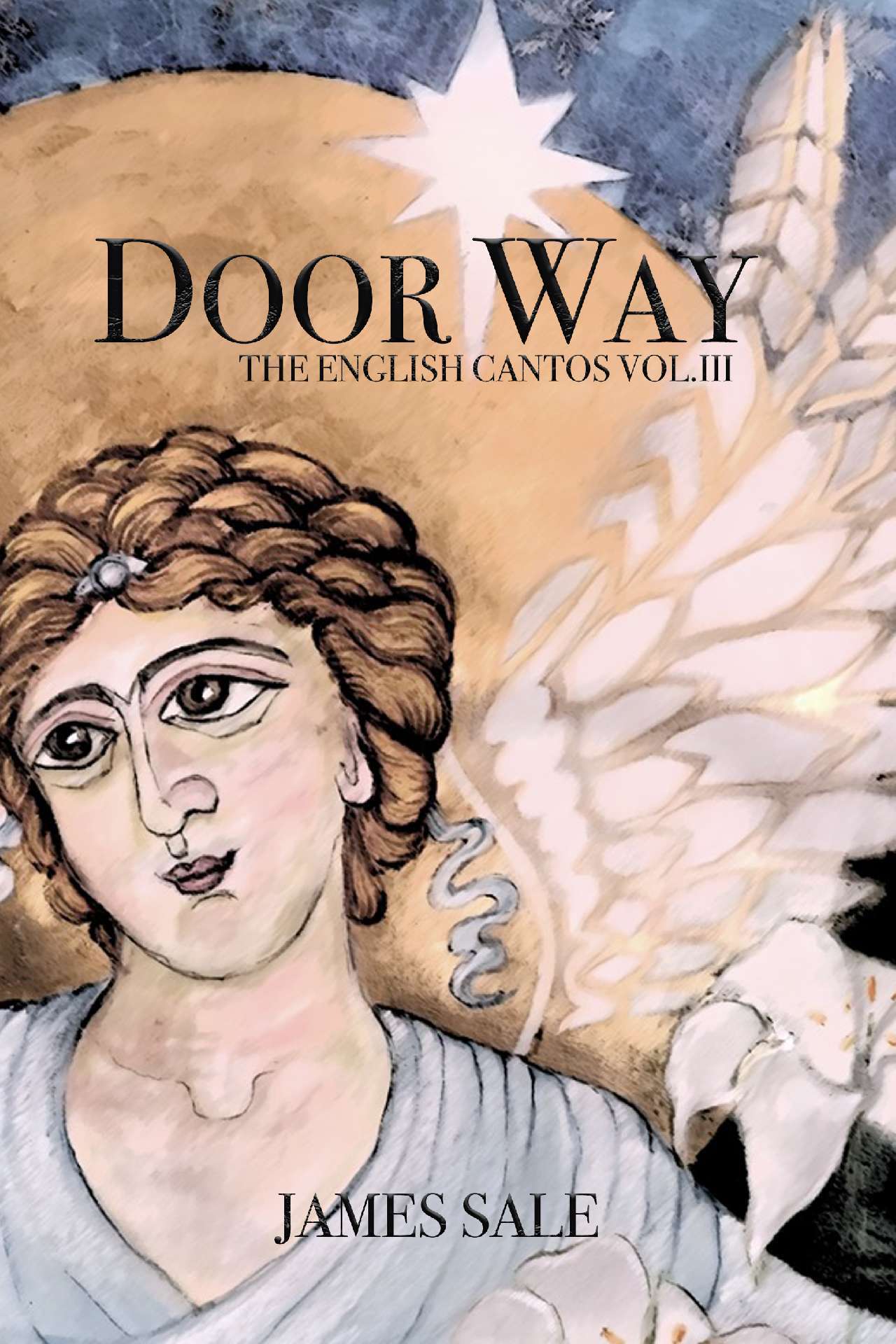
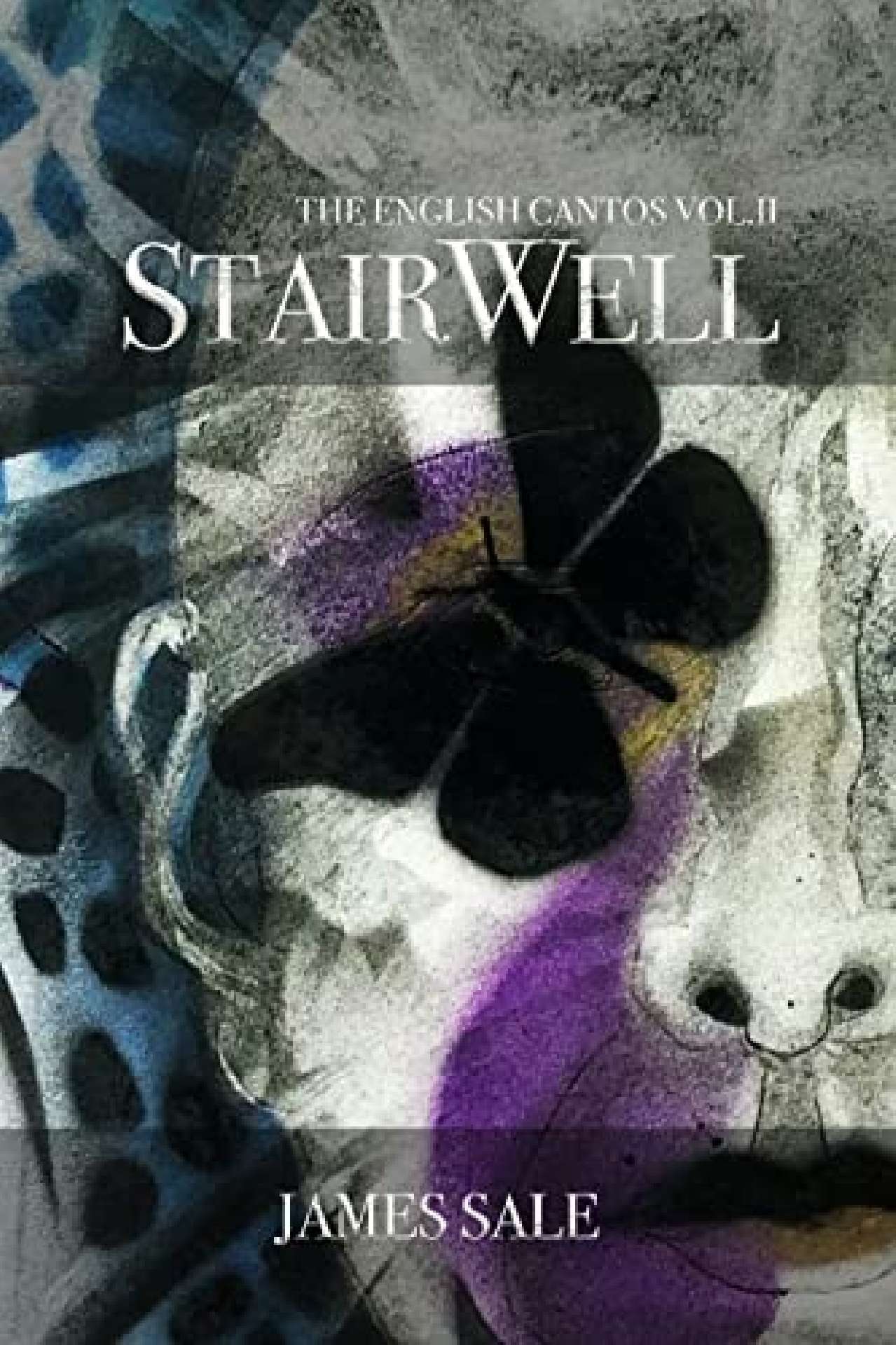
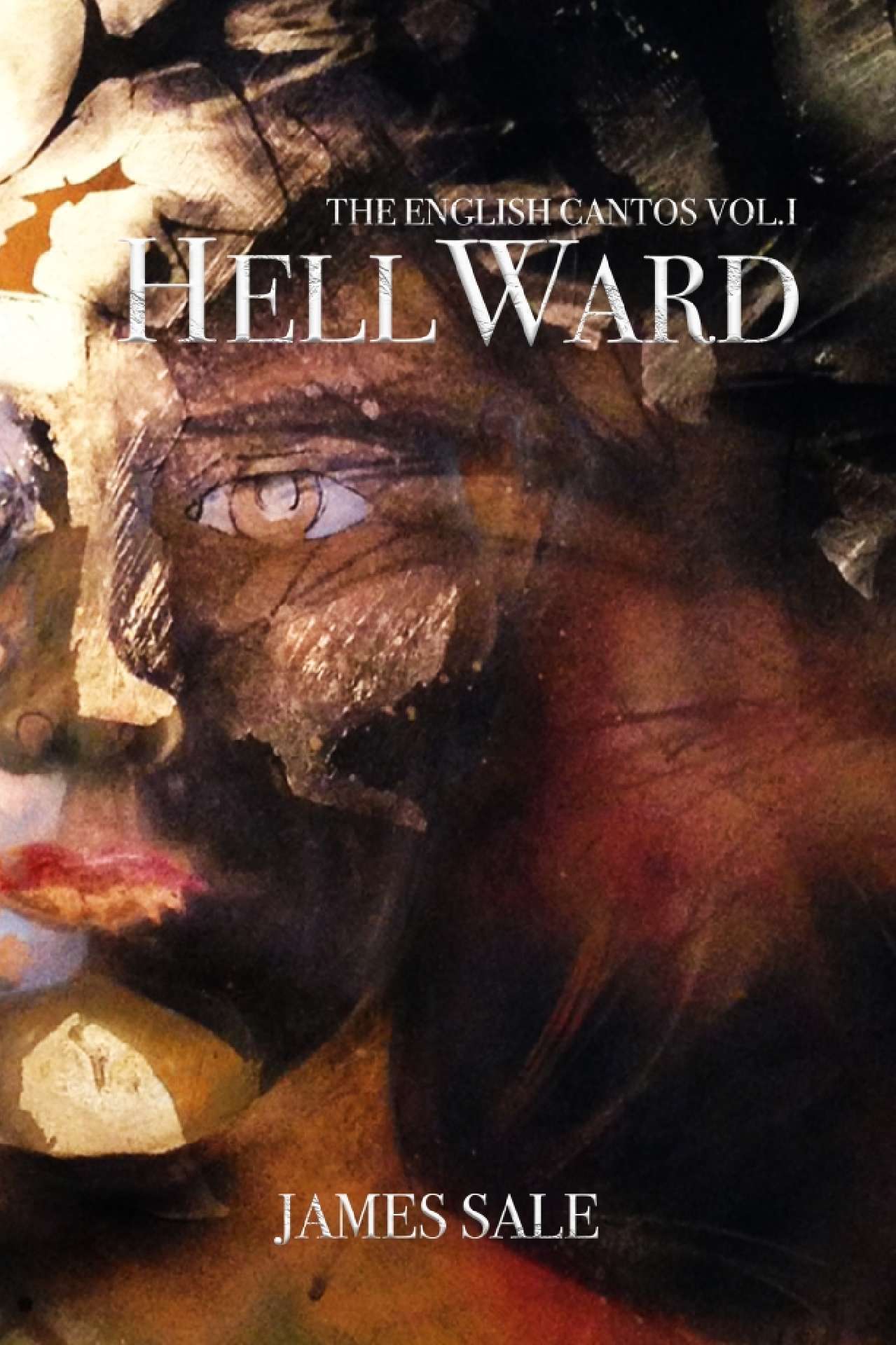
I have had the honor and privilege of knowing British poet James Sale personally and reading his poetry for over ten years. He remains one of the most active and prolific authors today, with over 40 books to his credit, in professional, poetic, and philosophical areas. He recently produced a trilogy mirroring and honoring (a “modern reimagining”) of Dante’s Divine Comedy in his works HellWard, StairWell and DoorWay, which together comprise what he calls The English Cantos. Sale is an expert in the Greek myths, as well as Shakespeare, and has written a study guide on Macbeth as well as the recently published Gods, Heroes and Us: Greek Myths in the Modern Era— both in 2025. He has also just published The Burning Word: A Poetic Pilgrimage through Suffering, Faith, and Divine Encounter (2026). It also contains a detailed introduction by the excellent poet Brian Yapko, who was winner of the 2023 Society of Classical Poets International Competition. It is my pleasure to share my experience with this meaningful and purpose-driven poetry collection. James Sale’s poetry can be immediately identified by his open, earnest faith, combined with a spiritual honesty, a poignant candidness about his own life experiences, a fluency in the use of form and rhyme (particularly slant/imperfect rhyme), and a perspective enmeshed in Western tradition, with unabashed, copious references to Dante, Shakespeare, Greek mythology, and Biblical figures and stories. In this collection he repurposes some of his poetry found in his trilogy as well as some of his shorter poems, to create a narrative of struggle, faith, and victory over circumstance—which in his case, was his battle with cancer. I find his perspective particularly germane to my life experience, because my youngest daughter has been in her own cancer battle with leukemia since August of 2025. I can understand his fear of the unknown, his honest, humble pleading with the Divine, and his gratefulness in his victory over disease. This is a highly educated and erudite man with an open, naked heart, candidly expressing his life experience, and how he synthesizes what befell him in his cancer battle. As Sale says in his Introduction, while he writes from a “Christo-centric” view, the work is “offered to anyone who has ever wrestled with questions of meaning, suffering, love, or transcendence.” I found this to be true indeed, in that the common human experience of suffering, triumph, and faith are relatable points of reference for anyone, regardless of their religious or philosophical frame of reference. This collection intersperses some of Sale’s shorter poems with longer excerpts from his English Cantos trilogy. His excerpts act, as he says, “as cornerstones of the sequence: opening the descent, standing at the midpoint, and closing with the vision of Christ enthroned.” Each shorter poem complements the larger excerpts, like jewels set at the sides of a larger center-diamond. Each creates a special world, a window into a personal place in Sale’s mental state, or state of faith. The three sections Ruin, Repair, and Revel alliteratively frame his cancer in terms of the three locations of Dante’s Divine Comedy: Hell, Purgatory, and Paradise. Already in the very beginning of Part One: Ruin, one is met with an explanatory epigraph for the poem “Cancer’s Hospital Bed,” an excerpt from Canto 1: HellWard. I find such introductory, supplemental information to be very helpful to the greater understanding of subjective, personal poetry, which too often can remain cryptic, obscure, or void of context for the reader. I’m very thankful for Sale providing epigraphs when he felt it would enhance the reading experience and reader understanding. (This is something I am doing in the second edition of my sonnets collection—I have come to understand that providing context to potentially enigmatic poems is not a weakness but very often an expediency.) I found the last lines of this excerpt to be particularly touching to me because of my daughter’s ongoing cancer battle. It is gratifying to see how many different ways the healing power of God can reach into a person’s life and touch them in their time of illness: “As if hanging, and hanging there my bed— Out to deeper depths than this sick ward holds And sinking at last the human cancer shed If seeing my own horror and its toll Might let light intrude, penetrate my soul.” Here we see the universal described through the very particular, a human edging near death, terminal illness, great physical pain, spiritual anguish, and the resolution that in his cry to God, he had an encounter with the Divine. In the poem “Inside the Whale,” we see that Sale employs his mastery in the use of both perfect and slant/imperfect rhyme: “looked,” “booked”—but then “ducked,” “waked”: Three days, three months inside, who knows? Only we know as he emerged, Vomited back to land again, Albino-white from depths he’d plumbed, How shocked they looked. Was this a man? Inside the whale, inside the ward, who cares? The difference was the same— Gutted so his prophecy was dumbed, His death seemed booked. Yet for all that’s logic, tragic, stuck Inside the whale and unpurged Beside there is who has no name Or number that can like ours be summed, No fate that’s ducked. Three days, three months, who feels In entering the whale, the ward, the pain? But in that deep, that depth, that voice sounds As if all stars in one gasp hummed—and Jonah waked. Sale perfectly masters imperfect rhyming. I never find myself fully conscious of his imperfect rhyming at first, but rather a sense, a feeling that something is different than what I might have expected. Yet this disturbance is not unpleasing, or unlikable, or too loud, or too obvious, because Sale’s craft is subtle in its variations and deviations. In Part Two: Repair, the poem “In All My Troubles” we find a poem that is so hymn-like, I would very much like to see it set to music! Sale is employing the art of repetition—but this repetition is never boring, or redundant, or trite, or the doggerel of a Hallmark card. It is always done in a way to reach to the deepest part of you, by nudging over and over again, almost like a hand on the shoulder, or something that keeps reminding you, and then reminding you, and then reminding you again. His use of repetition is always done so skillfully that I always find that I am greatly moved by its effect: I was set wrong from the very start— Yet from the start only I was to blame; In all my troubles there was only Him: I call on Him, I call His Name. I pursued a course off-course, and laughed— It seemed the thing to do, and know no shame; In all my troubles there was only Him: I call on Him, I call His Name. I did what humans do, and said, ‘It’s passed’— As if decisions, life and all were just a game; In all my troubles there was only Him: I call on Him, I call His Name. I held objectives that were false and vain— In things untrue I held my deadly aim; In all my troubles there was only Him: I call on Him, I call His Name. I ate sour fruits from sharp misdeeds— That mind, body, spirit welcomed all the same; In all my troubles there was only Him, Which He delivered—His saving name.” Sale’s style of repetition here actually creates a kind of music, conjuring the subconscious through recurring sound, in the manner of a Proustian memory. The beginning of Part Three: Revel begins with “Re-Visiting Dante,” a most complex and profound set of three poems, deep in spiritual awareness, combined with beauty and great truth. He starts with the epigraph quoting Clive James: “For Dante it was a strict rule not to rhyme the word ‘Christ’ with any other word except itself,” and yet Sale proceeds to turn that quote on its head, rhyming each section deliberately with “Christ”: “sufficed”, “sacrificed”, and “diced,” with the closing line “And all routes there, converging, into Christ.” Moreover, Sale incorporates three additional rhymes in the final stanza: “priced,” “enticed,” and the neologism “emparadised,” which only serves to bolster and reinforce the aural effect of what is (in this instance) a sequence of perfect rhymes: 1. Inferno Down we went like no other care were there; No sense we’d be bedraggled, drowned, doomed, or lost; All that mattered was now, that was our care— Stuff the plan another framed, damn that cost. But so I found myself alone, and dark, And one I wanted then I could not name. There was suffering, less, more, yet all the same. Instead of speech, sounds with no meaning’s mark. Where was the one whose merit had sufficed? 2. Purgatorio One tear. One tiny drop. Just at the end Of life when all was fated, decided, gone; That one tear—from my eye—against the trend Which had been my grain, selfish and alone My life whole, but now it sprung, self-aware And flagging up to heaven above, who knew, Who propelled this thing, this living grace through … That by his power my nothing too would share, Because another had been sacrificed. 3. Paradiso Chaff became pearl, and pearl so highly priced. I saw the stars, beautiful, set in sky; Like pearls too, and mine, me emparadised, A presence next to me who could not lie; And with the breathing, profound heart enticed Me to abandon all, like thoughts and why, To be, be like Him, to let being fly, Emptiness lost upon the throw it diced; And all routes there, converging, into Christ.” My favorite poem of the collection is “Keeping the Door,” a panoply of grotesque imagery that illustrates the struggle against sin, a ghoulish combination of degeneration and decay: Ant hordes scurried in purposeful files; Angry, alert, full to demonic marching: They came in batteries to batter: __But I kept the door. Worms twisted achingly upwards into wiles Of air and ever coiled most arching On pathways which would be straighter, later; __But I kept the door. Flies swarmed, furtive, across cow-spattered piles Of filth scenting another kind of charging On which they could clamber, puke, lather; __But I kept the door. Butterflies in legions, larvae-bursting smiles, All innocent as green is in Spring’s urging— So did pity move me more, and rather. __Still I kept the door. I highly recommend James Sale’s The Burning Word for several pleasant hours reading. Anyone who has had or is undergoing a cancer battle, or any other major illness or trauma, will appreciate the honesty, candidness, and open, sincere expression of pleading to God in the time of trial, and the faith which can overcome fear, pain, and doubt. Sale is one of the few poets alive today who can so deftly weave both mind and heart into meaningful tapestries of images, sounds, words, and rhymes.
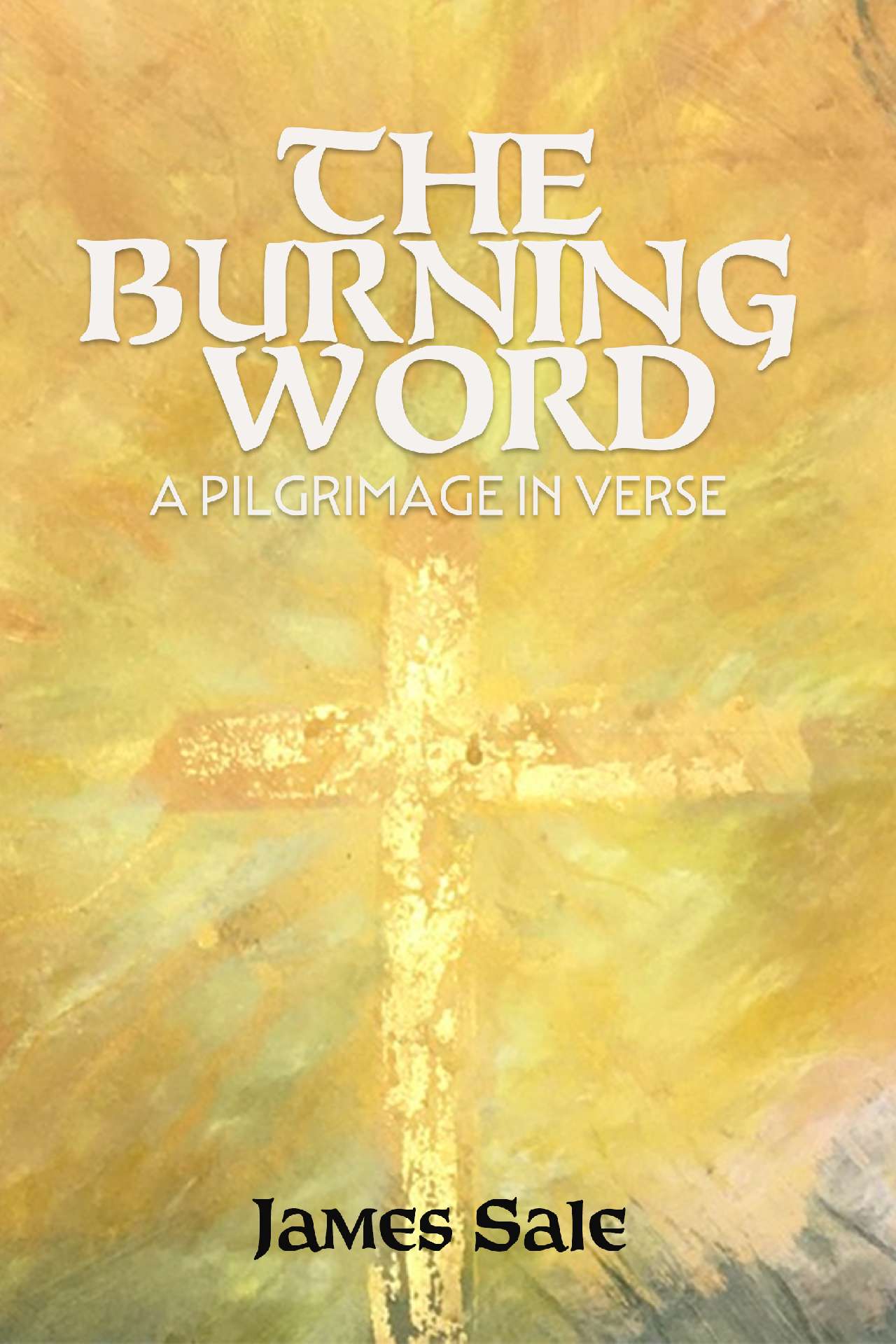
I want to shout out work by not only an absolutely incredible author but a constant source of profound inspiration in my life. I am biased, of course, but then I’ve declared my relationship to the author in question in the title of this post! I’m talking about my wonderful father. My dad is a poet. Quite a major one too. What I mean by that is not necessarily that he’s famous or sold lots of books, although there are cases to be made for both, but rather than his work is sort of revolutionary. We are at a tipping point now in the West in which we have railed so stridently against tradition, have argued so volubly against meaning and truth, that now to create within traditional frameworks, to honour the past, and to embody religious values has become a radical act. Every day, I see people posting on Substack that they would like to read more poets and see more poetry. Well, here is your chance. The Burning Word is a frankly masterful collection of poems spanning a fifty-year writing career, bridging the gap between old and new, traditional and modern, formal and free. There are poems here written with a young man’s burning ardour, and poems written in the “recollected tranquility” of older age. There are poems here about direct encounters with God, and poems about more humanistic concerns: a battle with cancer, the loss of loved ones, the hell of self-doubt—and the triumph over all of these. The framework of this poetry is undoubtedly and unashamedly Christian, but like the Christians of old, the wisdom here is designed to cross the borders of language, culture, and religion. I sincerely believe my father does not aim to preach with this work, but he does aim to lay his own story bare—whether you believe his testimony or not is up to you. But one cannot help but be moved in uncovering his story one lyric at a time. There’s one more thing I should say about this book: my mother did the artwork on the cover. She, too, has been a constant source of strength and inspiration in my life, and instilled in me a love of fantasy novels which has never died. So, here’s to my mother and father, and the wonderful things they do, and the beautiful thing they have made. May your ears too be opened by the Burning Word!