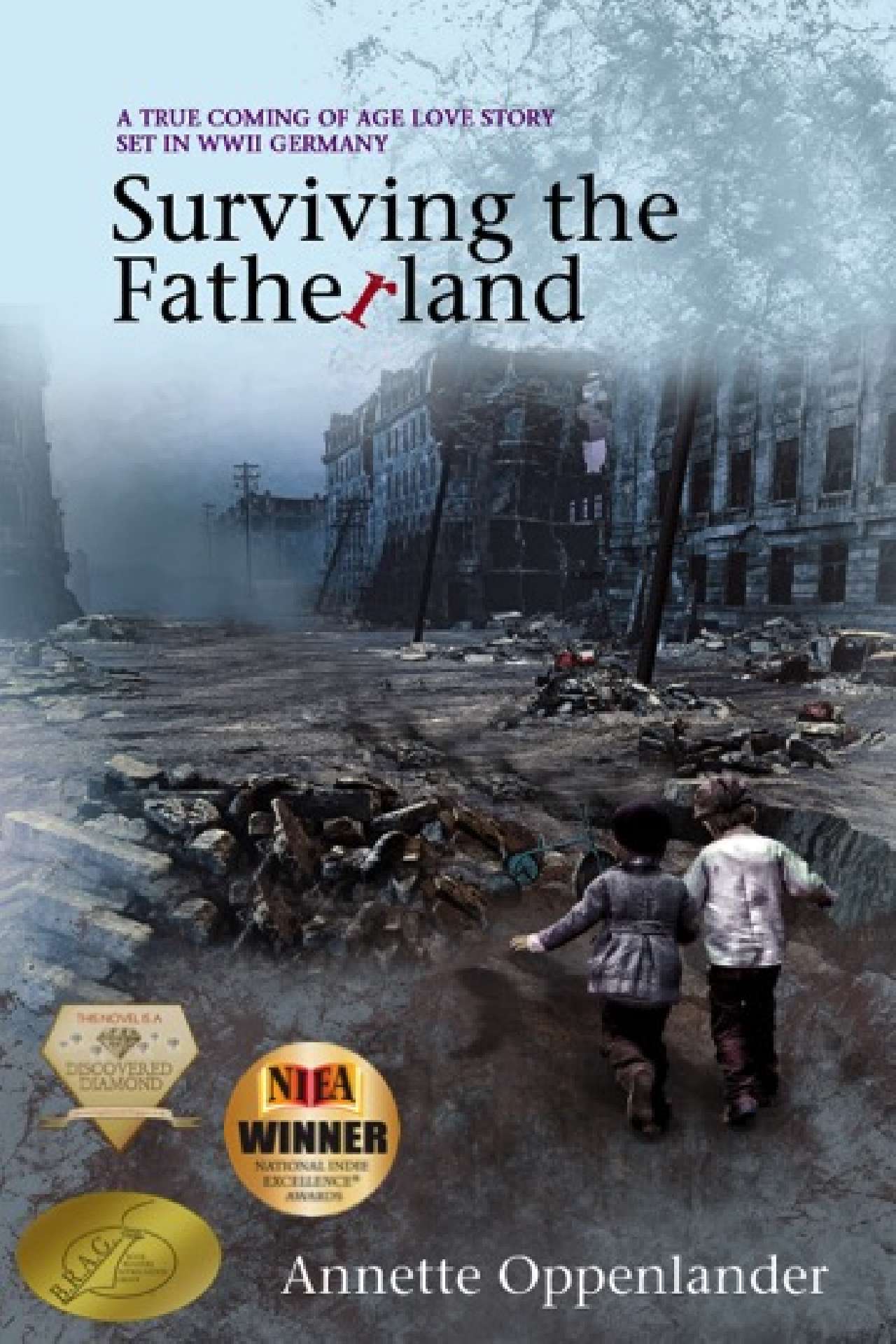
Surviving the Fatherland - Moving Love Stories of WWII Germany IV
Formats: E-Book, Audio, Paperback
Ages: 16-18, 18+
Winner/Nominee of eight awards
“This book needs to join the ranks of the classic survivor stories of WWII such as ‘Diary of Anne Frank’ and ‘Man's Search for Meaning’. It is truly that amazing!” InD'tale Magazine
“This type of raw, articulate, history-based storytelling pays homage to the war children who bore witness while struggling to survive.” Publishers Weekly (PW)
Based on a true story and set against the epic panorama of WWII, SURVIVING THE FATHERLAND is a sweeping saga of family, love, and betrayal that illuminates an intimate part of history seldom seen: the children's war - a tale of two youths whose courage and resilience stands for the forgotten childhood of an entire generation.
Solingen, Germany, 1940: When her father goes off to war, seven-year-old Lilly is left with an unkind mother who favors her brother and chooses to ignore the lecherous pedophile next door. A few blocks away, twelve-year-old Günter also loses his father to the draft and quickly takes charge of supplementing his family's ever-dwindling rations by any means necessary.
As the war escalates and bombs begin to rain, Lilly and Günter's lives spiral out of control. Every day is a fight for survival. On a quest for firewood, Lilly encounters a dying soldier and steals her father's last suit to help the man escape. Barely sixteen, Günter ignores his draft call and embarks as a fugitive on a harrowing 47-day ordeal--always just one step away from execution.
When at last the war ends, Günter grapples with his brother's severe PTSD and the fact that none of his classmates survived. Welcoming denazification, Lilly takes a desperate step to rid herself once and for all of her disgusting neighbor's grip. When Lilly and Günter meet in 1949, their love affair is like any other. Or so it seems. But old wounds and secrets have a way of rising to the surface once more.
Awards
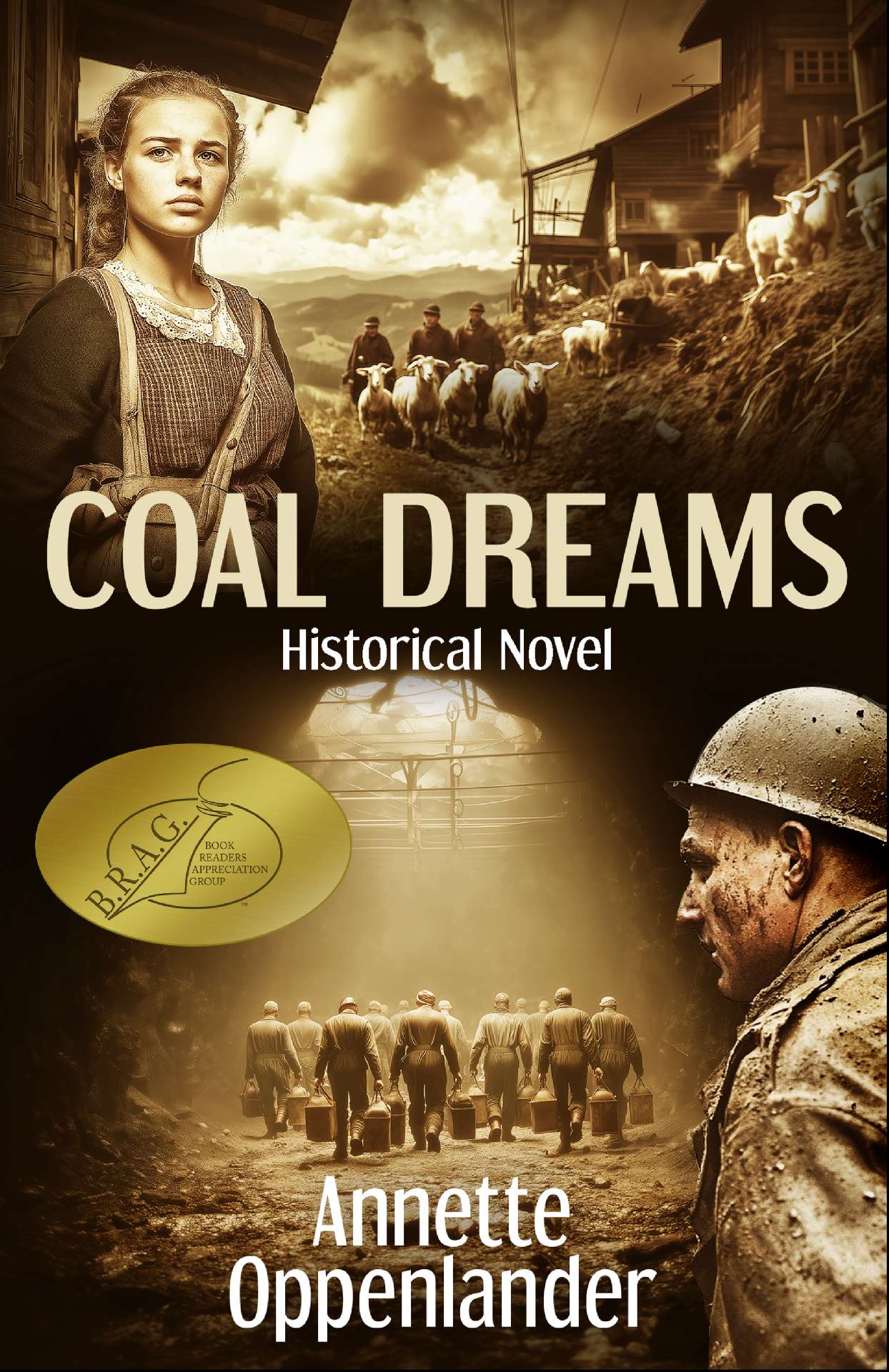
2017 National Indie Excellence Award, 2019 Gold Global eBook Award, 2018 Indie B.R.A.G. Award, 2017 Winner Chill with a Book Readers’ Award, Finalist 2017 Kindle Book Awards, 2018 Readers’ Favorite Book Award, Discovered Diamond Historical Novel, An IWIC Hall of Fame Novel, 2020 Skoutz Award Silver (German translation)
Reviews
Annette Oppenlander opened doors in her heritage that most people would have kept closed when she penned Surviving the Fatherland: A True Coming-of-age Love Story Set in WWII Germany. She records her parents' young lives as they watch fathers, brothers, and friends go off to fulfill their duty fighting for Hitler’s regime. While Gunter Schmidt’s father and brother are sent to fight, he faces battles of his own as the man of the house. Providing for a mother and younger brother, while there wasn’t food to be found, no work available, and Nazi spies planted in the neighborhood, was almost impossible. Lillian Cronen faces unique challenges as a girl. She must support her mother and brother while warding off the attentions of her mother’s beaus. I feel almost inadequate to write a review on the lives of two people who went through unimaginable turmoil under a dictator who betrayed his own people. Annette Oppenlander’s tribute to her parents through Surviving the Fatherland: A True Coming-of-age Love Story Set in WWII Germany is simply beautiful. She paints a vivid picture of how the German people were broken by the sacrifices they made to their country. At times I could not put Surviving the Fatherland down; at other times I had to walk away from the starving people, the bombings, and sad conditions under which these people lived. Annette carefully records a different Germany than what the outside world perceived. I was amazed at how open her parents were about their suffering, the guilt they felt at times, and what they had to do to survive; it makes me long to read about the events that did not make it into this historical fiction novel. I loved this book!
Oppenlander’s wrenching latest (after 47 Days) follows two young Germans from their childhood during WWII in Solingen to their new lives in the 1950s. Parallel narratives are told by Lilly Kronen, aged seven in 1940, and Gunter Schmidt, 11. Their lives are first disrupted when their fathers enter the war, and challenges increase as rationing begins, followed by relentless carpet bombing. The horrors of war are continually thrust upon the children as they witness suffering and death, and when Gunter is mustered into the Hitler Youth program, he is reluctant to become a cog in the führer’s evil machine. Starvation, desperation, and destruction of homes and human life force the children to grow up quickly, and it is only when Lilly and Gunter meet for the first time in 1949 that they allow themselves an emotional reprieve. The pace is as relentless as the war itself, with brutal descriptions of the savage life endured by German children. The excruciating atrocities of WWII are far-reaching, as Lilly learns in 1945 of the death marches from concentration camps. This type of raw, articulate, history-based storytelling pays homage to the war children who bore witness while struggling to survive. (Self-published)
WWII fiction continues to be a popular genre, and as such it can be daunting for readers to make a selection that is both engaging and unique. This story is set apart from the usual fare in that it’s not about occupied France or the bombing of Britain, but focuses on another set of innocent lives torn apart by Hitler’s war machine: German women, children and elderly. Günter is in his early teens when both his father and older brother are sent off to war. In his care are his mother and younger brother, and as the rations dry up and the bombing begins, he finds it more and more difficult to keep them afloat. Soon enough he is also called to fight, and he must make a decision that is best for his family. Meanwhile, a parallel story is told about a young girl named Lilly, who is in a similar home situation. Eventually the two meet and become inseparable—until the emotional baggage they each carry threatens to unravel their newly constructed lives. Based on a true story, this novel offers an eye-opening view of the sufferings of the women, children, and elderly left behind once Hitler had taken away all able-bodied men for his war efforts. The landscape was desolate, worsening even after the war was over. The children who survived the war years carried scars that would affect their handling of the Wirtschaftswunder (reconstruction)—a particularly interesting period in German history. This novel is fast-paced and emotively worded and features a great selection of characters, flawed and poignantly three-dimensional.