 The Historical Fiction Company 2022 Highly Recommended Five-Star Award
 2023 Global Book Award Gold Medal-Teen & Young Adult Literature & Fiction
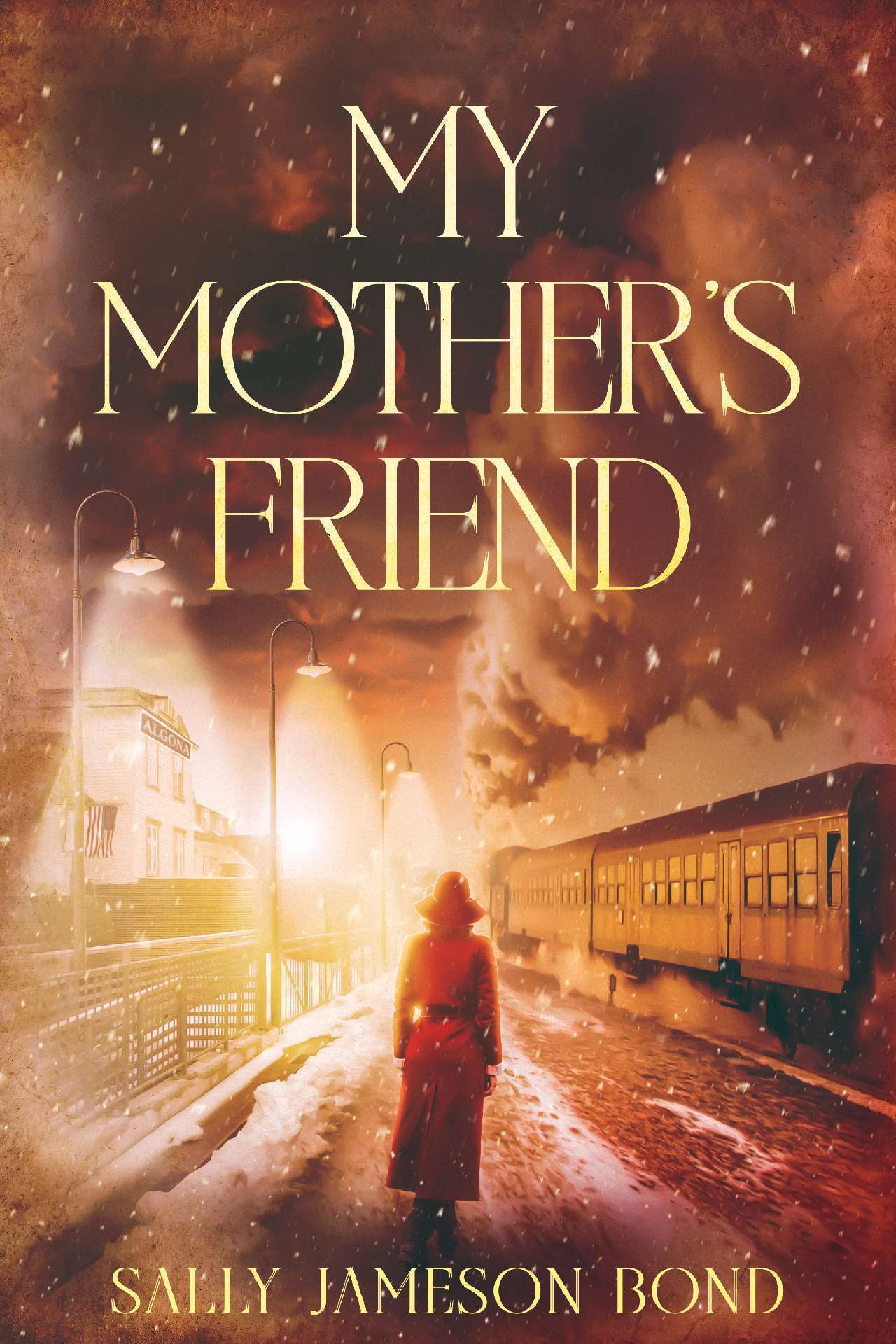
My Mother's Friend
Formats: E-Book, Paperback
Ages: 12-15, 16-18, 18+
Their forbidden love bloomed during the war. Will it survive peacetime?
Algona, Iowa. 1944. Phyllis ‘Phee’ Swensson cheerfully does her share. Busy caring for her father and siblings after her mother’s death, the high school senior tries to ignore the POW camp looming over her quiet hometown. But when she reluctantly joins a tour of the ominous facility, the gifted young pianist is stunned to hear an imprisoned musician’s haunting melodies.
Intrigued when the thoughtful man behind the music asks her to become his accompanist for an upcoming concert, Phee embarks on an unforeseen friendship. Yet as her feelings for the kind German deepen, choosing her path forward becomes dauntingly complex.
Will heavy secrets and a grieving country cut their tender connection short?
My Mother’s Friend is a poignant historical fiction novel. If you like slow-burn romance, richly researched home front settings, and relationship-driven stories, then you’ll adore Sally Jameson Bond’s evocative and emotional WWII tale.
Buy My Mother’s Friend for a sweet song of passion and loss today!
Reviews
My Mother's Friend Review My Mother’s Friend is truly a work of art and is sure to become a treasured classic for generations to come. It is written in such a way that the reader can clearly imagine what World War II was like from the perspective of the American populace. Light humor and accounts of wonderful experiences mix with more serious undertones to create a fascinating and thought-provoking reading experience. The story’s characters are delightfully and skillfully developed, showing first-hand the way of life in the 1940s. There is Frank Swensson, the pastor of St. Peter’s Lutheran Church; Phyllis (Phee) Swensson; Phee’s younger brothers, the twins Gustav and Tristan, and the youngest Swensson, Mollie (Sweet Pea.) The family is remarkably close, and it’s delightful to see how the family grows throughout the book. The story begins with Phee’s daughter (Mollie), a reporter in Berlin with an appointment for an interview with Maestro Ebinger. On her way, Mollie reads and re-reads her mother’s diaries to learn about the mysterious Maestro. The story then follows Phee Swensson as she is given a tour of an American POW camp housing German prisoners of war, and unexpectedly falls in love with a German pianist. At first, she denies her feelings, as constant reminders over the radio tell her the Germans are the enemy. But soon, she hears that the pianist, Sergeant (Horst) Ebinger, is forming a choir for the POWs, but he is without another pianist. And, hearing of Phee’s alleged musical talent, an American Corporal named Roy Phillips extends an invitation to Phee herself! As Phee has been playing the piano since she was seven years old, she’s more than capable. We hear that her mother had insisted Phee learn to play the piano from a very young age, and, over time, Phee had come to enjoy it. And then she learns that practice for recitals will be with Sergeant Ebinger (which wouldn’t really be a problem if it wasn’t for those piercing blue eyes and perfect manners!). “She expected him to be angry about the turn his life had taken. It would be helpful if he wasn’t angry because Phee was quite sure she couldn’t be friends with an angry Nazi. She was pleased she could communicate with “the enemy” and thought the experience was probably worthwhile. But should that communication continue? She wasn’t sure.” And, inevitably, the two become steadily closer through their mutual love of music and similar life experiences. Horst tells Phee stories of Germany, and of his time with the Nazi army. Phee tells Horst stories of her now-deceased mother, and the two frequently end up simply talking during the allotted practice time for their numerous recitals. And Horst’s feelings about the war come as a relief to Phee. “You must know, we want this to end. My comrades, we want it for many months,” he tells her one afternoon. And while the war looms in the background of the story, happy moments do occur. On New Year’s Eve, Horst and Phee kiss for the first time, setting off a rough-and-tumble, yet graceful relationship. To accompany the sometimes-melancholy reflection on the war and an almost Romeo and Juliet-style romance, there is a dash of daring. Phee always visits her mother’s grave on Mother’s Day, but this year she wants Horst to be there. Unfortunately, POWs are not exactly allowed to simply leave the camp. So, Phee devises a plan to smuggle Horst out under some blankets in her father’s car. The operation goes smoothly, and Horst is happy to” meet” Phee’s mother. That is, until the trip back when Corporal Roy hitches a ride with Phee and undoubtedly notices the blankets in the backseat. Later, Phee convinces Roy not to tell anyone, but that isn’t the last time Phee and Horst risk it all to be together. The age recommendation for this book is 12-18, but I personally believe the age group should be 16 and up simply for the more intimate descriptions. Phee eventually sneaks Horst to her room where they promptly dive into ‘adult things.’ As previously stated, the book has a tendency to become monotonous, but such were the times during World War II. Phee’s best friend Christa visits often, though she disapproves of “that damn Nazi!” Eventually, Phee and Christa drift apart following heartbreaking news about Christa’s brother (who was enlisted in the United States Army). Every night, Phee writes in her diary (affectionately named Daisy) about the events of her day. Her entries often feature Horst and her favorite guards. When Horst receives devastating news about his brother, fighting for the Nazis, Phee arranges to meet Horst in a nearby church (with guards nearby, of course). “—Dear Daisy—” [she writes that night,] “It was kind of an interesting day, not as bad as I’d feared. Horst and Roy and Cpl. Bickford got to church right on time for our meeting at 2. I gave them a tour (including the belfry), then Horst and I sat in the sanctuary and talked while Roy and Cpl. Bickford were guarding the doors.” The story picks up speed halfway through, developing into a fast-paced love story featuring forbidden love, a disapproving best friend, slowly resolving conflict knitted closely with news about the war, and enough secrecy to earn this book glowing reviews for plot and character development alone. And in the end, the story comes around in an impressive plot circle, back to Mollie in Berlin, and with Horst Ebinger, now a famous and talented Maestro. In all, the plot development is quite satisfying to experience, and serves as a reminder that happy endings don’t always happen the way we pictured. And that’s okay. My Mother’s Friend skillfully delivers well-made and thought-provoking points such as a rather prominent one regarding love, and how no matter what the situation is, love is the one thing that can forever endure. No matter how grave the circumstances, whether it be a war, prejudice, conflict, or misunderstanding, love can and will overcome any obstacle set before it. At 374 pages long, it’s a somewhat daunting book. My Mother's Friend by Sally Jameson Bond is an incredible reading experience for young adults. ***** “My Mother's Friend” by Sally Jameson Bond receives five stars and the “Highly Recommended” award of excellence.