

Robert Pill
ALLi Author Member
Location: United States of America
Genres: Academic, Religion
I have been retired since the late Spring of 2019. I spent my career in the Printing Industry, the last part of which I worked in Professional Services as a Program Manager/Programmer. I worked for several OEM manufacturers in that capacity (Creo Products, Eastman Kodak, contract with HP, Inc.). Around 1985 I started learning the Hebrew language and my interested was primarily in Biblical Hebrew. I took two courses taught by native Israelites, which gave me a "jump-start" in understanding pronunciation and recognizing word roots. I began the discipline of reading the "Bible" regularly in January 1980 and have read it all of the way through pretty much every year since then. In early 2012, I began reading the Hebrew first in my regular reading in English. I wanted to know what the words meant from the Hebrew, not just in the translations I was accustomed to. Thus, I began looking words up in various Hebrew Dictionaries, settling upon Ernest Klein's "A Comprehensive Etymological Dictionary of the Hebrew Language for Readers of English" as my primary reference. In 2019, working in the C++ programming language, I finished the first phase of code to convert the Unicode, Multi-wide UTF-16 font encoded sourced from the Westminster Leningrad Codex to a Web Hebrew UTF-8 based font encoding (in programming terms, it was like 'trying to herd cats!'). I then set up my online Hebrew-English Tanakh from that encoding, placing the Hebrew Scriptures side-by-side a modified JPS 1917 English translation. I put that completed Hebrew-English Tanakh on my website, https://www.the-iconoclast.org by September 2019 (having had base webpages earlier that summer). During the course of updating my website I decided I wanted to put a page together a discussion of the Ten Commandments. It was in that process that I discovered the uniqueness of the Leningrad Codex in its verse separations which I also found had not been adhered to by any other publications (both Jewish and Christian), particularly those which had claimed the Leningrad Codex as their source for the Hebrew Language based Jewish Scriptures! It was from that effort which led me to decide to write the book, The Real God Code: The Ten Commandments In The Leningrad Codex! In September of 2022, I published my second book, 'The Pill Tanakh: Hebrew-English Jewish Scriptures;' I typeset it using the LaTex Typesetting language and it is based on my conversion of the WLC - Westminster Leningrad Codex (digitized) which I converted programmically from a multi-wide unicode font to an ascii based web Hebrew font which I could manipulate. The English has been modified from the JPS 1917. In March of 2023, I published my third book, 'Jesus Cannot Be The Jewish Messiah*.' It is a commentary of the man known as the Apostle Paul. I also comment of the resurrection and have a chapter with the same name as the title. There is another chapter called The Talmudic Deception! In January 2025, I self-published my fourth book, 'Ad Mashiach Nagid - The Messiah In Daniel 9.' Previously, I had only been concerned about Cantillation Marks (Trop) which designated each and every verse ending for every verse in the Leningrad Codex. Having a desire to better understand "Messianic Prophecy," I looked at the Hebrew and other Cantillation Marks in Daniel 9:25. To my surprise, I found an Ethnacta (Aramaic word), shaped like an upside down "U" or "V" with a tick mark at its top, and placed to the left of the vowel mark designating a word's main accent, which designated the end of the first part of a longer verse. It so happened that an Ethnacta appeared in the "Seventy Sevens" and that part of the verse was preceded by "unto Mashiach Nagid." Thus, the idea of an 'Anointed' appeared in the first part of the verse (49 years from the order to return to and build Jerusalem). I discuss all of Daniel 9 and introduce quotes from reputable Jewish and Messianic Jewish scholars to help understand the passages.

Robert Pill's books
Genres: Religion
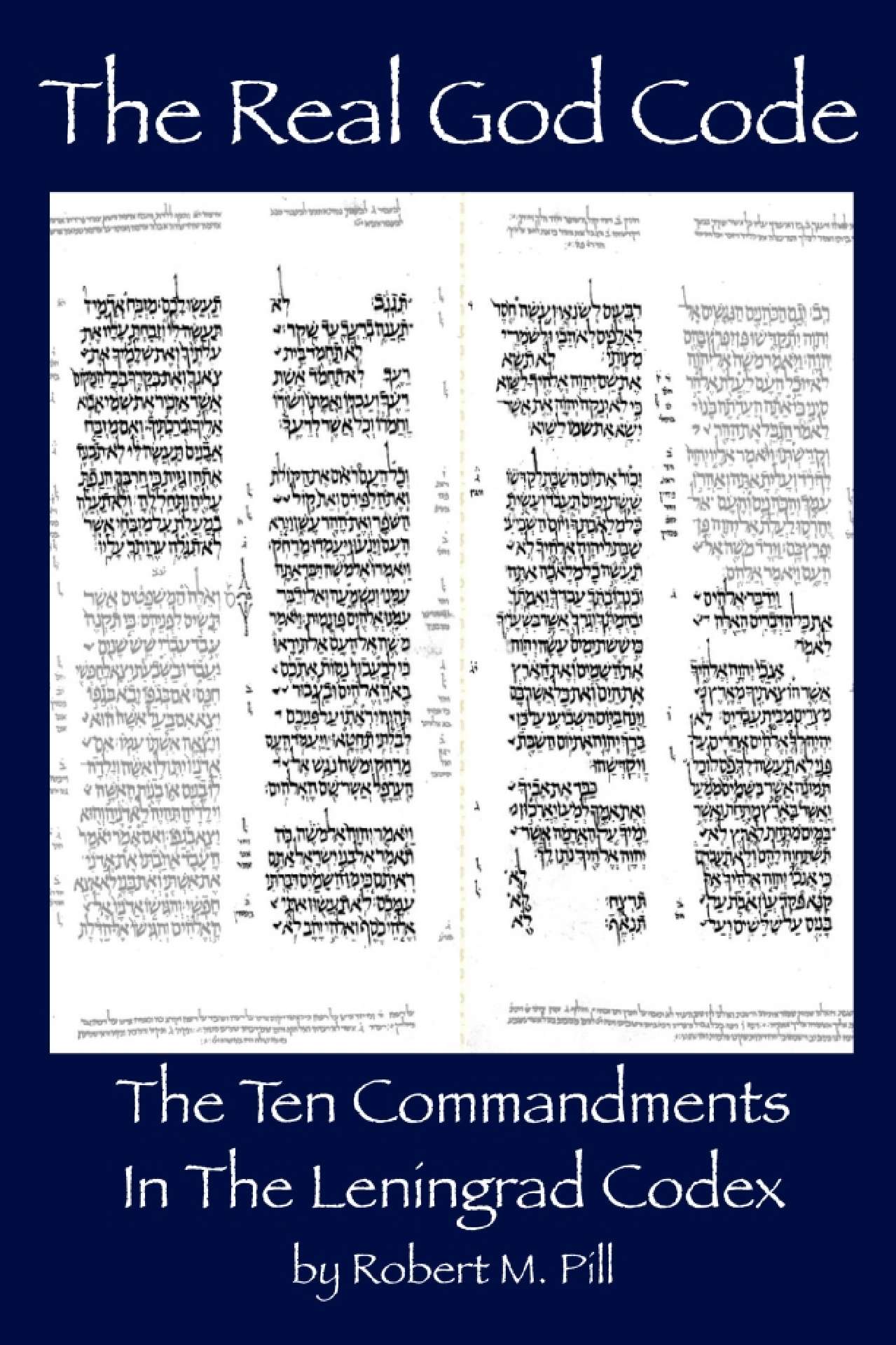
Yehovah, the transliteration of the name of God in Hebrew, considered that the two tablets of stone, on which He personally wrote the Ten Commandments, were of such importance that He commanded Moses to make a box of acacia wood and place them into it. That box is better known as the Ark of the Covenant. This book is primarily a reference for the Ten Commandments as rendered in the Leningrad Codex, the oldest complete manuscript of the the Hebrew language based Jewish Scriptures.