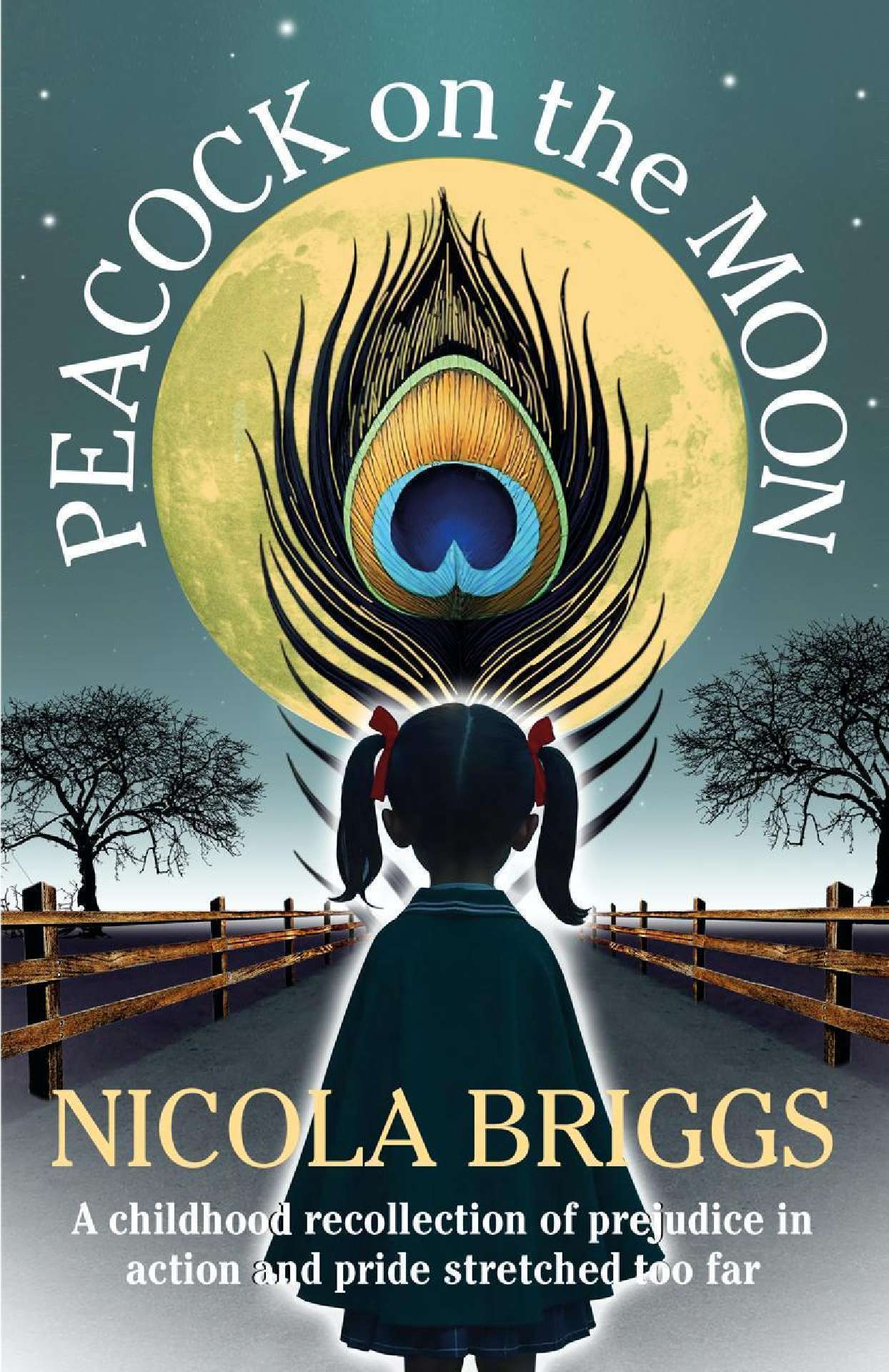
PEACOCK ON THE MOON
Formats: E-Book, Paperback
Ages: 18+
Nicola Briggs grew up in a beautiful Georgian house in Huddersfield, which she loved, but she didn’t realise how much until her parents sent her away to a prestigious boarding school at eleven. From then on, the idea of ‘home’ became a distant dream, a place she could only enjoy for sixteen weeks a year, a home that slipped further from her grasp with every term-time goodbye.
In this unflinching coming-of-age memoir, Nicola pulls back the curtain on a respectable Yorkshire family dominated by a brilliant, charismatic, and deeply flawed solicitor father whose bigotry and anti-immigration tirades seeped into every corner of their lives. Behind the façade of middle-class comfort in 1960s and 70s England lies a harsher reality: the casual racism, social climbing, and suffocating expectations that shaped a generation, expectations that Nicola was expected to accept. But would she?
Told with sharp wit, emotional honesty, and clear-eyed insight, her story is not a rose-tinted stroll down memory lane. This compelling exploration of family, class, and identity, highlights one girl’s struggle to come to terms with the values she was raised to inherit.
Advisory note:
Peacock on the Moon is set in a time when language, attitudes, and everyday assumptions were quite different from those of today. Some readers may find aspects of this original language offensive. References to overt discrimination appear throughout, not for shock value, but to offer an honest portrait of a family whose head was eventually required to stand before a Leeds Race Relations Tribunal in 1979.
Reviews
One of the most interesting and captivating books I've read in a long time. For someone who doesn't read a lot of books I demolished this one in 3 days. As a contemporary of the author in Huddersfield an awful lot of it resonated and described the stresses facing children going to boarding school at an early age. I can definitely recommend this book. Enjoy!
This memoir bucks all sorts of trends. No rags to riches story, this story is set in a life of privilege, of horses to ride, and as the title suggests, peacocks ranging over the grounds, all provided by a father whose involvement with the fascist movement would suggest a difficult read. In less capable hands I would have found it easy to close the book at an early chapter. Instead, I was gripped from the off. The detailed descriptions of life at home and later at boarding school are eloquent and evocative of the time. We follow the slow awakening of the writer’s sense of self, until she makes her first rebellion against her father, not to take the Cambridge Entrance Exams. Most remarkable of all, Briggs brings to the page a colourful and memorable portrait of her father, less devil incarnate, more loved father and incorrigible old rogue; a huge personality that I found myself missing at the end.
This striking debut stands as a triumph of first‑book storytelling, distinguished by its integrity, emotional honesty, and unwavering commitment to truth. The author invites readers into a vivid and intimate world, reconstructing a childhood shaped by the dual lenses of personal memory and the meticulously kept diaries of a young girl. Through this perspective, we witness the fraught and often painful dynamics between daughter and father—an intricate relationship complicated by the strictures of class, social expectation, and the unspoken rules that governed family life. The prose is both beautiful and unflinching, capturing an era in which racism, bigotry, and misogyny were not only commonplace but deeply woven into the social fabric. Rather than softening these realities, the writer exposes them with clarity and precision, allowing the discomfort they evoke to serve as a powerful narrative force. In doing so, the book becomes more than a memoir: it becomes a reflection on the generational echoes of prejudice and the long shadow such beliefs cast over families, identities, and intimate relationships. What makes this work remarkable is the balance it strikes between tenderness and critique, between personal revelation and a broader social commentary. It is a story of one girl’s coming‑of‑age, yet it resonates far beyond its immediate world, offering readers a compelling exploration of legacy—how the values, wounds, and silences of one generation can seep into the next. This is a courageous and compelling debut, one that lingers long after the final page.