

John Baillie
ALLi Author Member
Location: Germany
Genres:
John Baillie, once a naval officer who took to the skies, traded his wings for a calculator at 30, immersing himself in the world of finance. In 1974 as the stock market faltered, the oil industry buzzed with opportunity. His employers sent him to Aberdeen to oversee a key investment, and he made that dynamic city his home for 28 years, living there with his second wife before moving to Germany. In 1988, the escalating violence in Northern Ireland ignited Baillie’s creative spark. By 1989, he seized a pen and poured his thoughts onto the page, a process that gripped him relentlessly until his first book was finished five years later, entitled Solution for Northern Ireland - A King’s Perspective. Determining whether there was sufficient material for a second book (thirty-one years later) was a meticulous journey. When inspiration struck, another five-year endeavour unfolded, producing an expansive three-part saga, entitled Five Brothers in India - Personal Remembrance of Bengal and the East India Company 1795-1909. Though the second part is the shortest, it serves as a crucial link between the others, anchoring the narrative and driving Baillie’s core purpose to explore the enigmatic depths of occult philosophy. This reveals the early life of Jesus in Kashmir where he studied Buddhism before returning to Palestine, marrying and fulfilling his ministry. Jesus of Nazareth married Mary Magdelene at Cana, Galilee and started a family. Aided by his brother James (aka Joseph of Arimathea), Jesus engineered and survived his own crucifixion, and in so doing did not become the Messiah, but founded the Christian religion, which was spread effectively by Paul and Peter. A millenium later, Pope Innocent III became concerned that heresy was becoming mainstream in the Languedoc region of southern France and organised the Albigensian crusade led by Simon de Montfort against the Cathars. It was a brutal and bloody affair but failed to stamp out this outrageous belief. With positively no credit to the author, he is the subject of accidental birth. He tries to explain, In 1065/66 William the Conqueror decided that he had no future in France and that he would invade England. To promote this venture, he promised land to those who would join him. Amongst the 200 to 300 he recruited were three whose descendants would find a place in history. Renaud de Bailleul became Baliol became Baillie; Robert de Brus became Bruce; Alan Fitzflaald became Walter Fitz Alan, steward to the King of Scotland. De Bailleul was granted land in Northumberland and built Barnard Castle. De Brus was granted land north of Hartlepool. Fitz Alan was granted land in Shropshire. John de Baliol founded Balliol College in 1263 and married Princess Devorguilla Canmore. Robert de Brus married Princess Isabella Canmore. Walter Stewart married Marjorie Bruce and produced the line of Stewart kings. When the direct line of Scottish royalty failed, the nation turned to the Canmore Princesses. King John Balliol, son of Devorguilla, initiated the alliance with France which infuriated Edward I of England, and the Hammer of the Scots swept the Scottish King from power and returned him to his French estates. Robert Bruce, descendant of Isabella, held a meeting with John (the Red) Comyn Guardian of Scotland, in Greyfriars church Dumfries. He lost his temper, stabbed Comyn to death, rode to Scone and was crowned king. Scotland’s most famous son cemented his position at Bannockburn in 1314. Devorguilla’s grandson, Edward Balliol was crowned king in 1332 but failed to prosper and David II followed by the Stewart Robert II recovered the crown. The descent of King Charles III is assured from this point, albeit with German help. His distant cousin, the author, escaped the burden of kingship. This book briefly charts the course of the Baillies in Inverness and India with emphasis on the five brothers from Poplar. The 7 Key Bullet Points 1. Core Value Proposition AUTHENTIC HISTORICAL MEMOIR FROM THE HEART OF BRITISH INDIA - Experience the remarkable true story of five brothers who served in Bengal during the East India Company era (1795-1909). Based on original family letters and personal accounts, this book offers unprecedented insight into colonial India during one of history's most transformative periods. 2. Unique Content Differentiator THREE COMPELLING NARRATIVES IN ONE BOOK - Author John Baillie masterfully weaves together his personal memoir as a naval aviator and businessman, the history of the Scottish Balliol family, and the adventures of five brothers across the Indian subcontinent. 3. Historical Significance EYEWITNESS ACCOUNTS OF PIVOTAL EVENTS - Including the Battle of Pollilur (1780), Sikh Wars, Crimean War, Indian Mutiny and Relief of Delhi (1857), World War I, and World War II's Battle of the Beams. 4. Educational Value COMPREHENSIVE EXPLORATION SPANNING 1000+ YEARS - From Viking origins and Norman conquest to Victorian India and modern warfare innovation. 5. Themes & Literary Merit TIMELESS THEMES OF COURAGE; FAMILY; AND RESILIENCE - A human story of loyalty, ambition, and brotherhood told through authentic correspondence. 6. Target Audience IDEAL FOR HISTORIANS; STUDENTS; AND GENERAL READERS - Perfect for those interested in British imperial history, military campaigns, genealogy, and Indo-British relations. 7. Publication Quality HARDCOVER EDITION WITH SCHOLARLY RIGOR - Scheduled for release February 28, 2025. This book also explores fascinating alternative historical theories and occult philosophy, including investigations into Jesus of Nazareth's life between ages 13-33, connections to Kashmir and Buddhism, lost tribes of Israel. the Knights Templar, Freemasons, the Priory of Sion, and the divine right of kings through royal lineages connecting to Charlemagne and Mary Magdalene.

John Baillie's books
Genres: History
Formats: Hardback
Age Groups: 18+
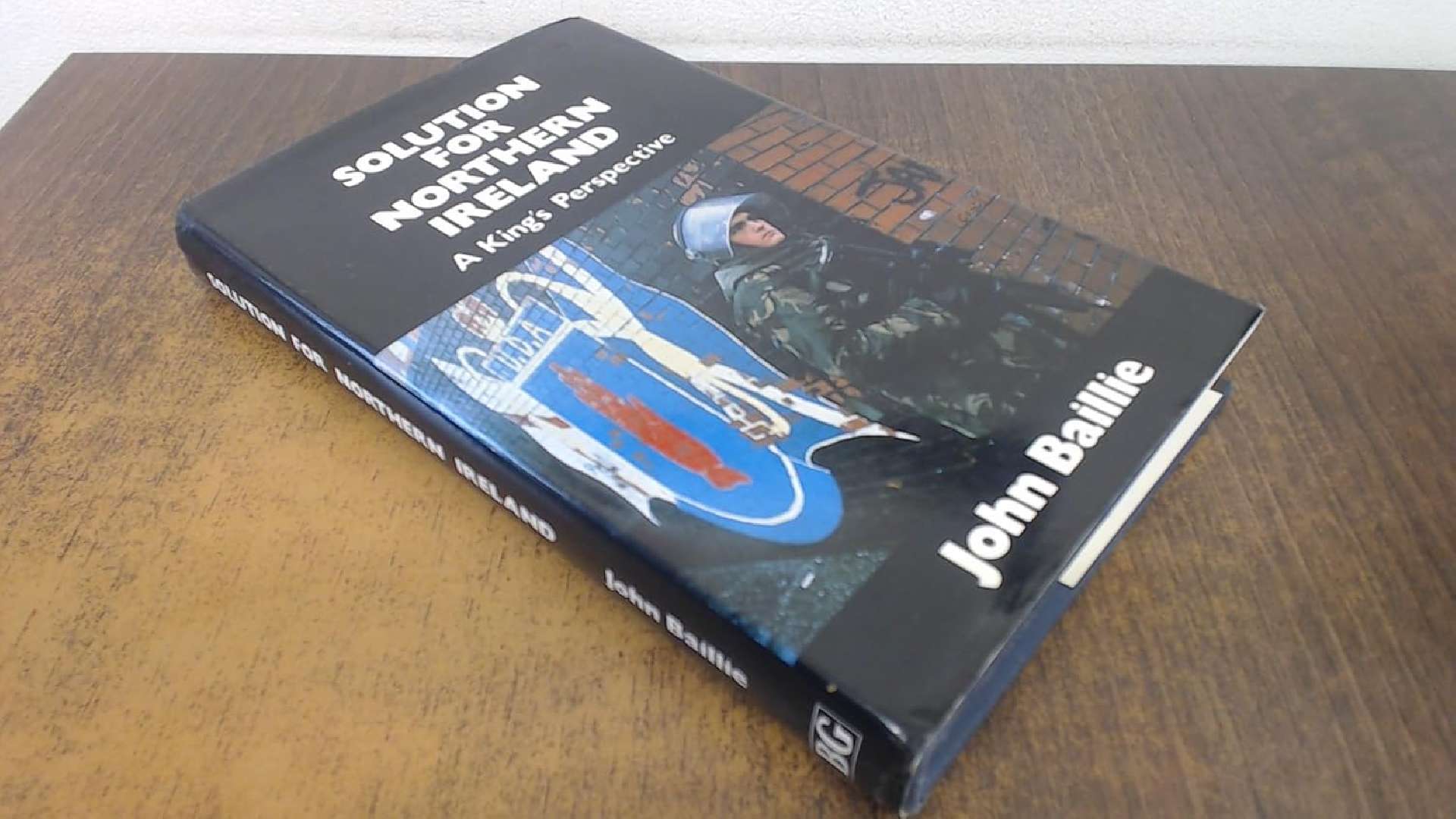
There is a solution which will end the violence in Ulster. The British Government must expel Northern Ireland from the United Kingdom, withdraw the British Army and institutions, and create the province a separate, independent sovereign state within the EU. Scotland gained independence from England in 1314 at Bannockburn and her example is a parallel for today. Four men were the main players: John Balliol, William Wallace, John Comyn and Robert Bruce. With all four the author has ties of blood. Thus can he draw a king's perspective. For to make Ulster an independent country requires not only the efforts of government. Prince Charles, fearless in expressing his ideas, could persuade the Queen to renounce the throne of Northern Ireland. Nothing less is needed. If this book fails to convince you, then the violence will continue for ever. Surely the people of Northern Ireland deserve better