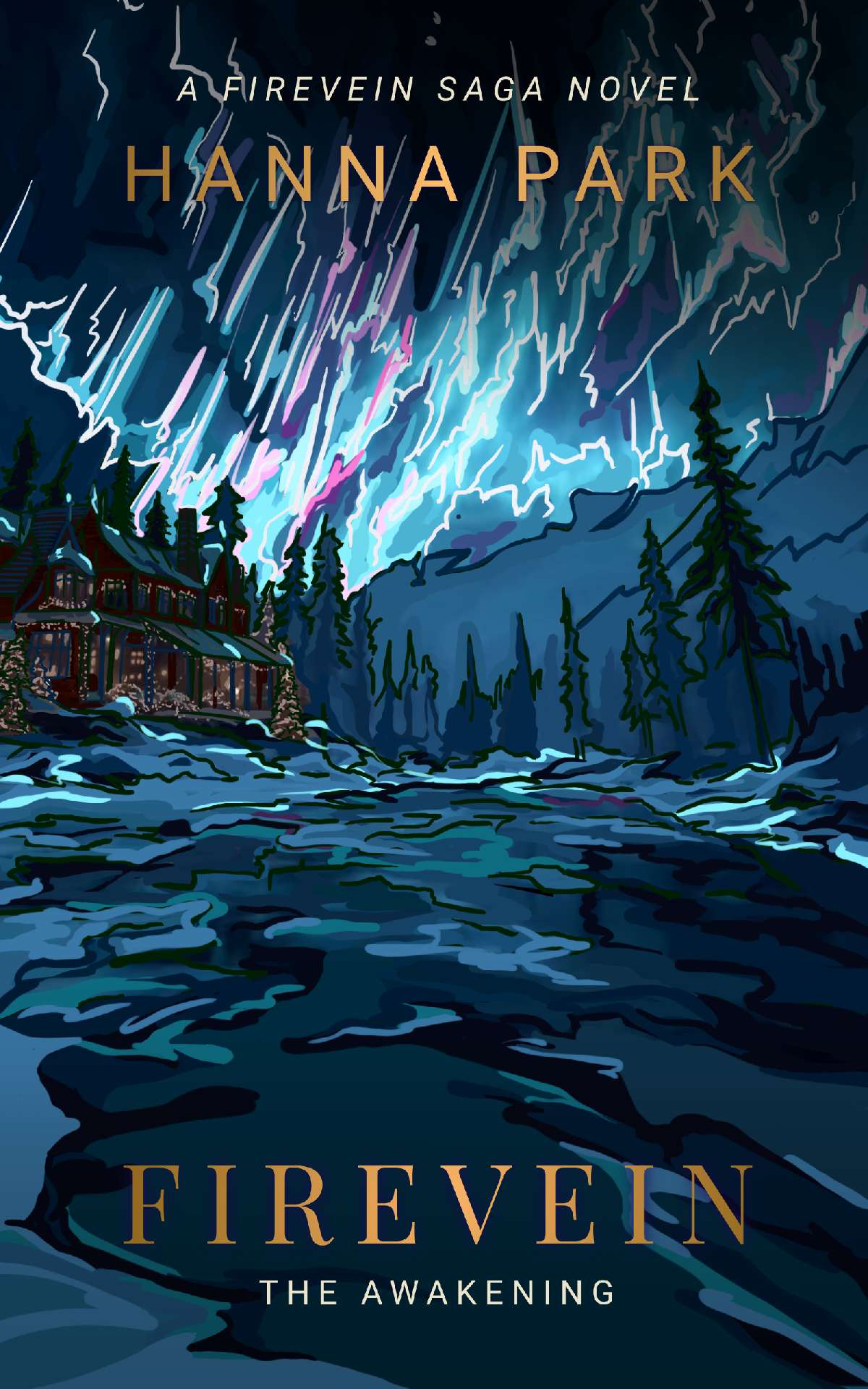
Firevein: The Awakening - A Firevein Saga Novel 1
Formats: E-Book, Audio, Paperback, Large print
Ages: 18+
I went to Røros for a wedding—not to fall for a man who looked at me like he had already mourned me once.
From the moment Rurik touches me, something beneath my skin ignites. Every kiss feels inevitable. Every glance pulls at something I can’t remember—but can’t ignore. He says I’ve lived before. That I’ve died before. That he has loved me through it all.
I don’t remember him.
But the mountain does.
The tunnels beneath Røros hum when I pass. Runes burn in the stone. And the closer I get to Rurik, the more something inside me awakens—hot, wild, and dangerous. I was never meant to survive what should have killed me.
Now something ancient is waking because I did.
I have buried her in every lifetime.
Different names. Different faces. Always the same ending.
Cristabel was never meant to live this time—but she did. And now the fire in her veins is awakening too soon. The force bound beneath the mountain is shifting, and the oath I’ve carried for generations is beginning to break.
I have waited lifetimes to hold her again.
This time, I won’t lose her.
Even if saving her means unleashing what should have stayed buried.
Reviews
Firevein: The Awakening begins in a world that feels warm, festive, and almost unreal in its beauty, but it does not take long for that atmosphere to shift into something stranger. What first appears to be a winter wedding trip slowly unfolds into a story shaped by memory, longing, mythology, and the unsettling feeling that some connections begin long before two people officially meet. At the centre of the novel is Cristabel Johnson, who arrives in Norway carrying far more beneath the surface than she initially allows others to see. Outwardly she is witty, flirtatious, and endlessly talkative, using humour to smooth over awkwardness and discomfort before anyone can look too closely. Yet underneath that brightness sits exhaustion, grief, and the lasting emotional damage left behind by illness and abandonment. The revelation that she survived cancer, only to be left by the person who should have supported her, changes the way many of her reactions are understood. Her humour stops feeling careless and begins to feel protective. The novel handles that vulnerability carefully. Cristabel is never reduced to her suffering, nor is she presented as fragile because of it. Instead, the story allows her to remain contradictory—confident and insecure, bold and frightened, deeply lonely while trying very hard to appear unaffected. That balance makes her feel far more believable than many fantasy romance heroines. Alongside her is Rurik, whose presence shapes the emotional atmosphere of the book almost immediately. Their first meeting at the airport is written with an unusual sense of familiarity, as though both characters are responding to something half remembered rather than entirely new. The attraction between them is immediate, but what gives it weight is the sense that recognition arrives before understanding. As the novel progresses, the relationship between them becomes increasingly physical, and the story leans heavily into erotic fantasy. However, the intimacy rarely feels disconnected from the emotional or supernatural elements surrounding it. Desire in this novel is tied closely to memory, instinct, and identity. Physical closeness becomes a way of uncovering truths rather than escaping them, which gives those scenes a stronger narrative purpose than simple attraction alone. The setting contributes enormously to the atmosphere. Norway is presented almost like a place caught between reality and folklore—snow-covered streets, candlelit buildings, forests, ancient hotels, and traditions that feel older than explanation. The further the story moves into Røros and the spaces surrounding it, the clearer it becomes that the world itself is not entirely ordinary. The novel gradually introduces the idea that humans are not the only beings occupying it, and that older forces continue to exist quietly beneath modern life. What I found particularly effective was the way the mythology unfolds slowly rather than through long explanations. Fragments of memory, repeated sensations, strange recognitions, and moments of uncertainty slowly build into something larger. The novel trusts the reader to sit within uncertainty for quite a long time before everything begins to connect. By the end, the story becomes less concerned with whether the supernatural elements are real and more focused on what they represent. Beneath the mythology and sensuality sits a story about being seen fully after pain, about returning to something once lost, and about the terrifying hope involved in trusting love again after survival has taught you not to expect it.
A Love Story That Defies Time. There are some books that feel carefully plotted, and then there are books like Firevein: The Awakening, which seem to move more through emotion, instinct, and atmosphere. This is very much the latter. It begins with something deceptively simple — a woman travelling to Norway for a friend’s Christmas wedding — and gradually unfolds into a story about memory, survival, longing, and the strange feeling that some connections exist long before we understand them. From the moment Cristabel Johnson arrives, there is an undercurrent of unease beneath the festive surface. Snow-covered streets, lantern light, old wooden buildings, and a town that looks almost too perfect all create the sense of stepping into somewhere suspended slightly outside ordinary life. Even before the mythology fully emerges, the atmosphere suggests that this is a place carrying older things quietly beneath it. The relationship between Cristabel and Rurik develops with an intensity that the novel never tries to apologise for. Their connection does not feel tentative or newly formed. Instead, it carries the weight of recognition from the beginning, as though they are stepping back into something interrupted rather than starting from nothing. What makes this work is that the emotional side of their relationship remains just as important as the physical one. The intimacy throughout the novel is tied closely to memory, trust, grief, and the fear of loss. Cristabel herself gives the story much of its emotional depth. Beneath her humour and constant chatter is someone carrying genuine hurt, and I thought the novel handled that vulnerability surprisingly well. The quieter details surrounding her illness and abandonment reveal themselves gradually, allowing the reader to understand why joy, affection, and being wanted matter so deeply to her. Rather than defining her through suffering, the novel shows someone trying to reclaim happiness after believing she may never have it again. Alongside the romance runs the novel’s mythological thread, which steadily grows stronger as the story progresses. Strange memories surface without warning, moments repeat with unsettling familiarity, and the boundaries between past and present begin to thin. One of the aspects I enjoyed most was the gradual realisation that not everyone inhabiting this world is entirely human. The book introduces these elements slowly enough that they feel less like sudden twists and more like truths waiting to be recognised. The setting plays an important role in this as well. The old hotel, the forests, the frozen landscapes, and the lingering sense of old folklore create an atmosphere where the supernatural never feels entirely separate from ordinary life. Instead, it exists alongside it, half-hidden but always present. What emerges by the end is not simply a fantasy romance, but a story about endurance — of love, memory, and identity across time. It is emotional, sensual, occasionally dreamlike, and completely sincere in the world it creates. I found myself far more invested in these characters than I expected to be, and I finished the book with the strong sense that their story is only just beginning.