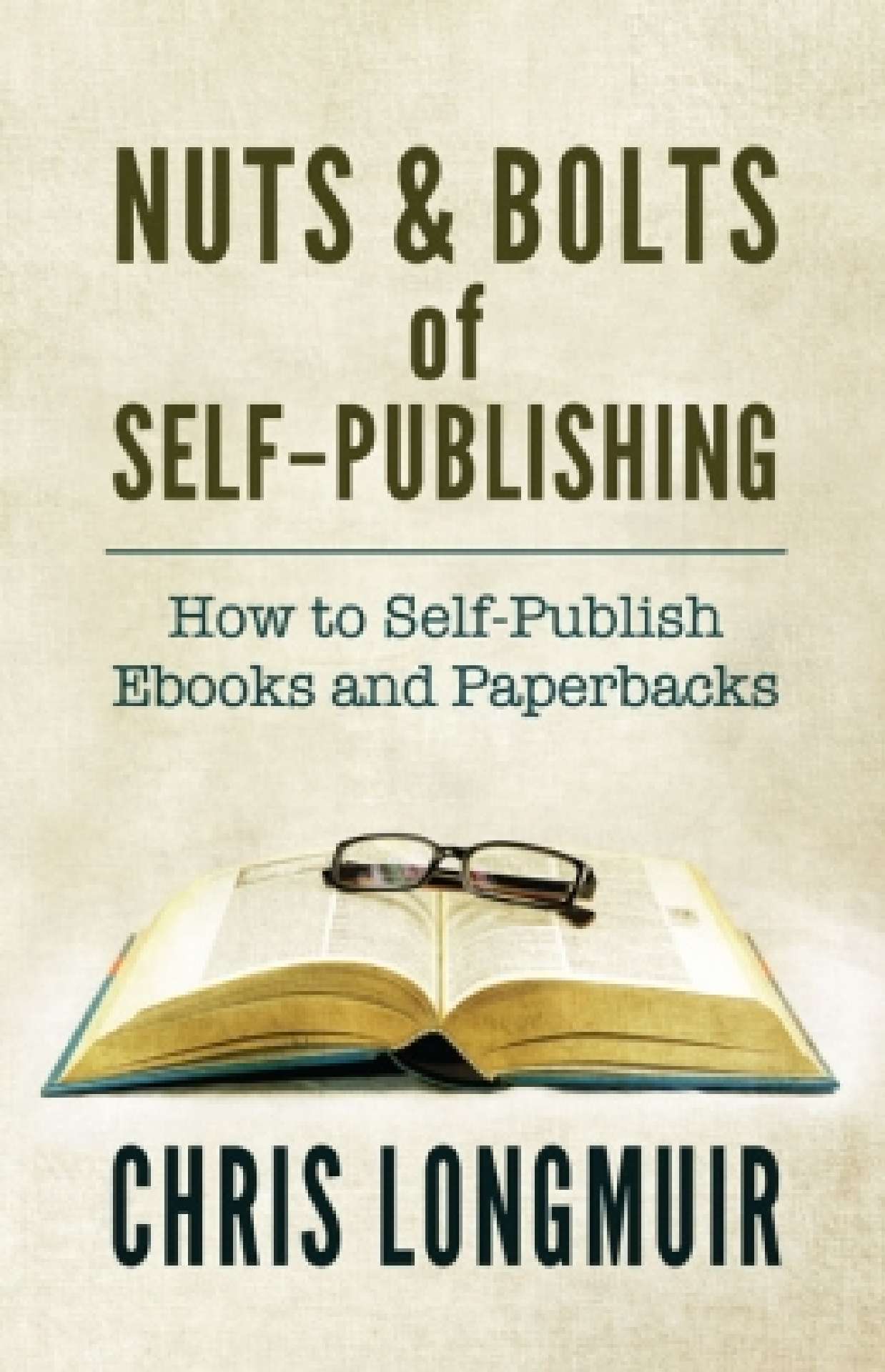
Nuts & Bolts of Self-Publishing: How to Self-Publish Ebooks and Paperbacks
Formats: E-Book, Paperback
Ages: 18+
If you only buy one book on self-publishing, this is the one for you.
Self-publishing is easy once you have the roadmap and know what is expected and what you have to do to produce a professionally designed book. This comprehensive guide to self-publishing will provide you with that roadmap. It covers all aspects of self-publishing and will help you avoid some of the pitfalls you might encounter.
Included in this guide you will find step-by-step instructions on what you need to do before you self-publish, how to create accounts, how to format your manuscript for ebook and paperback publication, how to add a TOC, how to acquire an ISBN and register your book, how to upload and submit your book for publication, and what you need to do after publication.
Alongside the step-by-step instructions you will find information about costing and pricing your book, author services and outsourcing, as well a lot more.
Chris Longmuir is an award winning novelist. Her previous crime novels have won the Pitlochry Award, and the Dundee International Book Prize.
Reviews
I’m Dreading This But I Need To Do It Nuts & Bolts of Self-Publishing: How to Self-Publish Ebooks and Paperbacks by Chris Longmuir Best for: People interested in self-publishing a book. In a nutshell: Author Chris Longmuir shares their experience in self-publishing while providing seriously detailed instructions to prospective self-publishers. Worth quoting: (Mostly because it’s a fun bit of trivia) “Project Gutenberg was launched in 1971. This was the year they digitized the United States Declaration of Independence, making it the first ebook in the world.” Why I chose it: I want to get my book out there. Review: A couple of weeks ago I was texting with a friend about the book I wrote a few years ago. It’s a non-fiction advice book, focused on the relationships between people who don’t have kids (me) and people who do (damn near everyone else). I’ve put together book proposals, built a supporting website (my goal is to write multiple advice books along the same theme), and reached out to agents, but I don’t have the type of platform agents look for. In lamenting this, my friend pointed out that her sibling self-published their books. To be honest, I’d passed on this idea because I fell into the same trap that Longmuir references: self-publishing is just a vanity option for people who can’t write well. The reality is there are so many books out there, and a limited number of agents and publishers. I’m not a celebrity with a few hundred thousand followers; no one is going to make money off of me. But I like to write, and I think there is a market for the type of book I’m writing. I spent a lot of time on it (and still have editing and sensitivity reading ahead of me), and it’s silly that it’s just sitting here in Scrivener. So, I bought this book. And it is exactly what it says it is: nuts and bolts. To the point where Longmuir provides detailed step-by-step instructions not just of the process but of the actions needed. It runs the risk of getting out of date if Amazon or other self-publishing outlets dramatically change their software, but it’s going to be wonderful when I get to the point of publishing. Instead of saying “when you get to the eBook details, fill in the information”, they list out all the information you will need (and whether you have to come up with it yourself or if they is a menu of options) so you aren’t starting at a screen, scrambling for the details. Similarly, Longmuir offers warnings and suggestions based on their experience. Some publishing platforms will need to have exclusive rights unless you uncheck certain boxes. Others will provide the things you need (an ISBN) but then they are the publisher and you aren’t. Longmuir even offers a detailed breakdown of how royalties work. It’s not the most riveting read, but it’s definitely as well-written as a book on this topic could be while still being useful. I’m not ready to hit submit yet, but when I am, this is the book I’m going to rely on to get me through it. And then I hope a few of you Cannonballers will check it out.
I could just say, to any novice indie publisher who knows nothing – and doesn’t realise that s/he knows nothing – This book is a fantastic, easy to read, fun and practical introduction to indie publishing; and anyone contemplating self-publishing should simply go and buy it. And buy the paperback, so you can prop it on your printer, refer to it obsessively, and learn from it, until the book falls open from over-use at certain favoured places. I could just say, this is one of the best books I have read on indie publishing. (No, it’s not quite the only one, but it is definitely among the best ….) Compact, easy to read and to carry around, easy to love and take to bed in the wee small hours, this book has really helped me so much to lay aside the twin fears of anyone starting out on the indie publishing road, namely, that (a) publishing one’s own books is all too complicated for one to understand and (b) that indie publishing is bound to be too expensive. Longmuir makes no assumptions about what the reader knows, (which is so refreshing). So she explains just about all that needs to be explained for the serious novice. That might sound like a bit of a contradiction, but we all need to start somewhere. Okay, so in these technological times my age might be against me, but it does also give me some advantages: I know my way around a keyboard fairly well, and I know that there are several ways to find and do things. So I can work out that to de-format a book for Kindle, (before reformatting it, in a mobi-friendly fashion) you can use the ‘find’ and ‘replace’ functions to de-format (which means, take out all the tabs, italics, bold, extra fonts…but leave in the page returns) in seconds. Nuts and Bolts is gently and helpfully repetitive, so you don’t have to read the whole book again to find a single reference. It also contains helpful checklists. That there is a definite order to the way of doing things also becomes apparent, but knowing what to do and how and why, is such a relief. And it occurs to me that while I will engage the services of several professionals to help with editing and publishing expertise, there is no better way to get it right than to know a bit about what the whole process involves before making that call or sending that email.