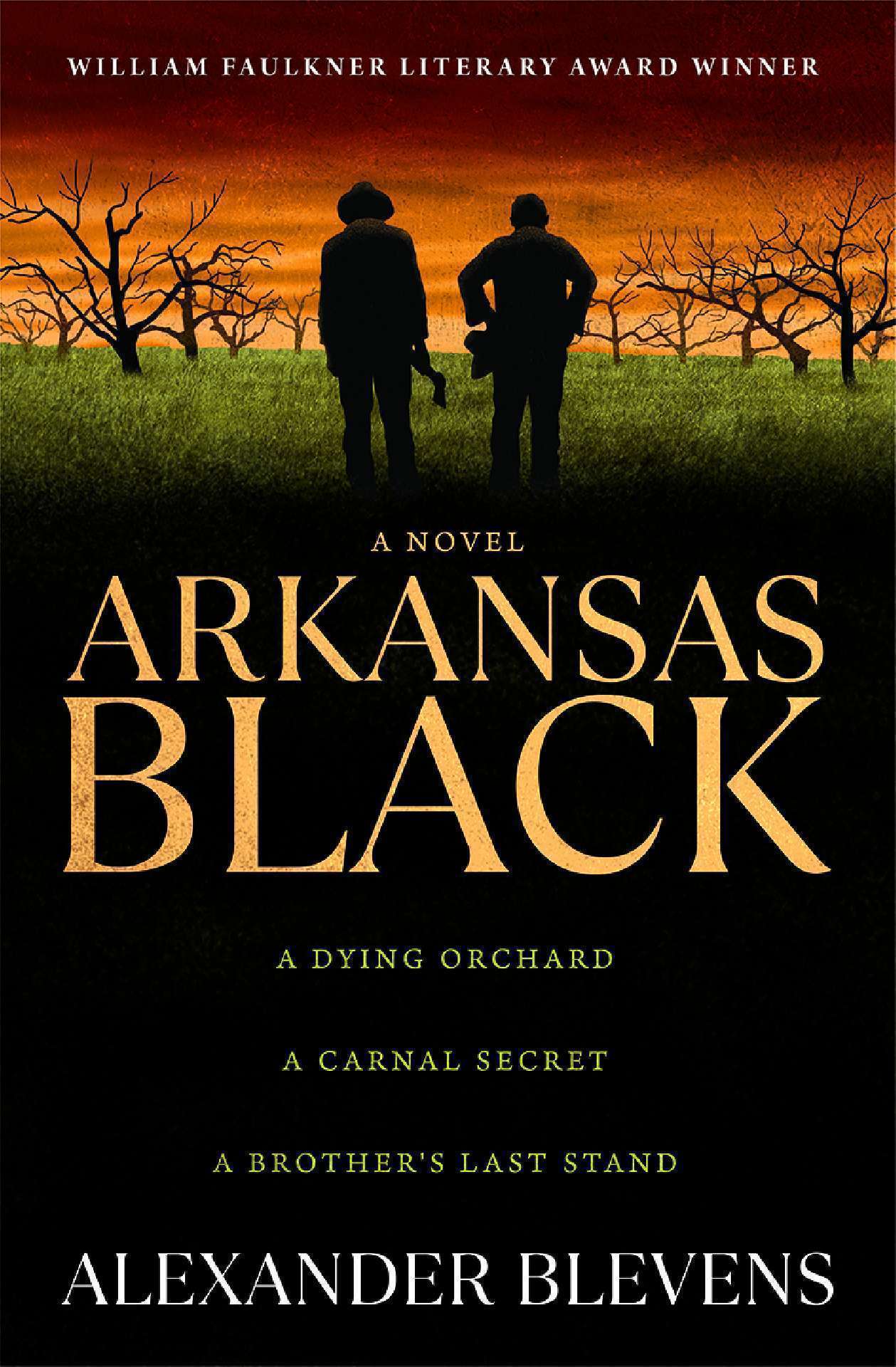

Arkansas Black
Formats: E-Book, Paperback, Hardback
Ages: 18+
Arkansas, 1927. When a late spring frost destroys the apple harvest, the Fitch family orchard collapses under the weight of ruin. Jesse Fitch, weary and pragmatic, prepares to leave the land behind with his wife and young son. But his identical twin, Silas—stubborn, rooted, and haunted by legacy—refuses to abandon the soil that shaped their families.
Before the Fitches can part ways, a sudden tragedy unearths a long-buried secret—binding the brothers even as it tears them apart. As grief deepens and loyalties fracture, Jesse and Silas find themselves on opposite sides of a battle that threatens to unravel their family’s legacy. Bloodlines stretch to the breaking point, and the survival of the Fitch clan hangs in the balance.
Set against the fading rhythms of a Southern landscape in turmoil, Arkansas Black is a lyrical reflection on inheritance, identity, and the fragile threads that hold a family together when everything else falls apart.
Reviews
Indies Today By K.C. Finn Star Rating: 5/5 "A masterful work of storytelling that brings noir and nuance to the family saga genre." Arkansas Black by Alexander Blevens is a Southern Gothic tale of fractured kinship, rural identity, and generational survival. The story opens in a Northwest Arkansas orchard, with a devastating spring frost that wipes out the Fitch family’s apple crop. This initial disaster spells devastation for the central focus and livelihood of the family, and Jesse Fitch prepares to abandon their ancestral land with his wife and son. Meanwhile, his identical twin brother, Silas, digs in. He’s attached to the land, the heritage, and what it would mean emotionally to abandon this place, and is determined to fight for their legacy at all costs. But before these brothers can part ways with their differing views, a second tragedy unearths a long-buried secret, forcing Jesse and Silas into a spiraling conflict that tests the limits of blood, loyalty, and sanity. Suddenly, so much more than the orchard is on the line. As the brothers struggle to define home and family in the face of ruin, the story evolves into a gripping portrait of men driven to extremes by land, pride, and truth. Author Alexander Blevens really knows how to capture a moment in time, and he writes with a raw, lyrical intensity that evokes the Southern landscape in all its beauty and brutality. The location has a rough and rugged feel to it that immediately evokes the masculine ideas that Jesse and Silas bring to the forefront of readers’ minds. What’s really clever about the way this story develops is, much like nature, the beauty and fragility of these two men is revealed for those willing to stop and take a closer look at them. Between the sense of masculine vulnerability and rural stoicism, the dialogue always remains grounded, natural, and regionally authentic, with a twin dynamic that is powerfully developed, showcasing deep psychological contrast in every facet of how these men think, speak, and act. That commitment to characterization keeps you totally invested, and it is hard to choose between the very different paths these brothers seem set on, with a moral ambiguity that gives the story emotional weight and realism, and attentive pacing that allows tension to simmer and boil over organically at just the right moments. Overall, Arkansas Black is an unforgettable portrayal of familial inheritance, both emotional and material, and a masterful work of storytelling that brings noir and nuance to the family saga genre.
Kirkus Get It Secrets, lies, and failing crops are tearing a family, and their farm, apart in Blevens’ historical novel. It’s 1927 in Benton County, Arkansas, and 30-year-old Jesse Fitch lives on his family farm with his 27-year-old wife, Marybeth, and their son Levi, who’s 7. His twin brother, Silas, is also there, as are Silas’ wife and daughters, and the siblings’ father, known as “Paps.” The land has been in their family for several generations, but it’s not producing like it used to do. A late frost, too much rain, and continued pest infestations have kept the trees from growing fruit, which means no money’s coming in for the family. Jesse is sure that the answer is to give up the farm and head west, but Silas and Paps are dead set against the idea, believing that the trees will fruit again next year. Jesse, however, knows the score: The Fitches owe more to the bank than the land is worth, but Silas swears everything will be fine. However, as determined as Silas is to stay on the land, he knows they need cash to stave off eviction, so he starts working with some locals who need an out-of-the-way farm to hide and smuggle illegal liquor. Jesse wants nothing to do with this arrangement, but Silas is willing to lie, cheat, or worse if it means staying on the land. Over the course of this historical novel, Blevens presents a compelling tale of hardship. Although the brothers are twins, they effectively act as foils to each other, and as they go about protecting their families in different ways, they manage to work with and against each other, by turns. There are vivid descriptions of the land (“He passed a cottonwood trunk, three feet in diameter with furrowed gray-brown bark, leaning over the river where the erosive wandering of the channel had robbed the tree of its tenuous clutch on the sandy bank”) and the Fitches’ hardships, making this work a journey into the past that readers can inhabit, and they’ll feel the family’s pain and loss as they experience it. A vivid and often touching novel of the fragility of family bonds.
BookLife Editor’s Pick Rating: 9.25 out of 10 Absorbing tale of twin brothers and hard choices in Prohibition-era Arkansas. Blevens’ absorbing second novel follows twin brothers Jesse and Silas Fitch as they navigate personal tragedy amidst the decline of their family’s Arkansas Black apple orchard. After facing bankruptcy, Jesse plans to leave their land with his wife, Marybeth, and their son, and he wants Silas’ family to come with them. But Silas has other plans—he is confident that he can repay their debt transporting illegal liquor, and he stubbornly vows to stay. The situation gets even more complicated when Silas’ wife, Anna Lee, dies giving birth to her sixth daughter, and the twins’ father-in-law, Mr. Suggs, makes Marybeth an offer she cannot refuse. Narrated in clean, straightforward prose and told mostly from Jesse’s perspective, the novel captures the delights and challenges of the farmers’ lives in early 20th century Arkansas. The descriptions of the orchard are particularly stunning, immersing readers in a landscape that is both beautiful and unforgiving. Though identical in looks, Jesse and Silas could not be more different from each other. Masculine and rough, Silas has garnered their father’s approval and backing, while sensitive, perceptive Jesse wrestles with feelings of abandonment. Throughout, the brothers’ disparate personalities create tension, particularly when a devastating secret threatens to tear the family apart. Readers will also enjoy the character of Mr. Suggs, whose cold, calculating mischievousness steals every scene. At times the story struggles with pacing, particularly when the plot is derailed by repetitive descriptions of each brother’s plans to resolve their problems. But the proceedings gather momentum following the death of Anna Lee, with the looming uncertainty and difficult choices facing the brothers making this book a powerful and engaging read. Ultimately the brothers’ volatile emotional dynamic, the power struggle between them, and the potent family secret lurking in the background like a ticking time bomb make this story riveting.